Looking with Layers
You are the hero of your travel story. I am here to hand you the brush or the camera settings and show you how to truly capture the magic of your journey, not just witness it.
Every trip is a complex tapestry of light, activity, and feeling. Yet, it’s easy to return home with images that are flat, one-dimensional, and fail to convey the richness of the moment. You've collected a postcard, but you haven't captured an authentic memory artifact.
The secret to moving beyond the generic snapshot is a technique called layered composition. This simple act of connecting a Foreground, a Middle Ground, and a Background into a single, cohesive frame is a brilliant way to tell a complex story.
More than a technique, it’s an application of the Engaged Observer mindset. It fundamentally changes how your brain archives the moment.
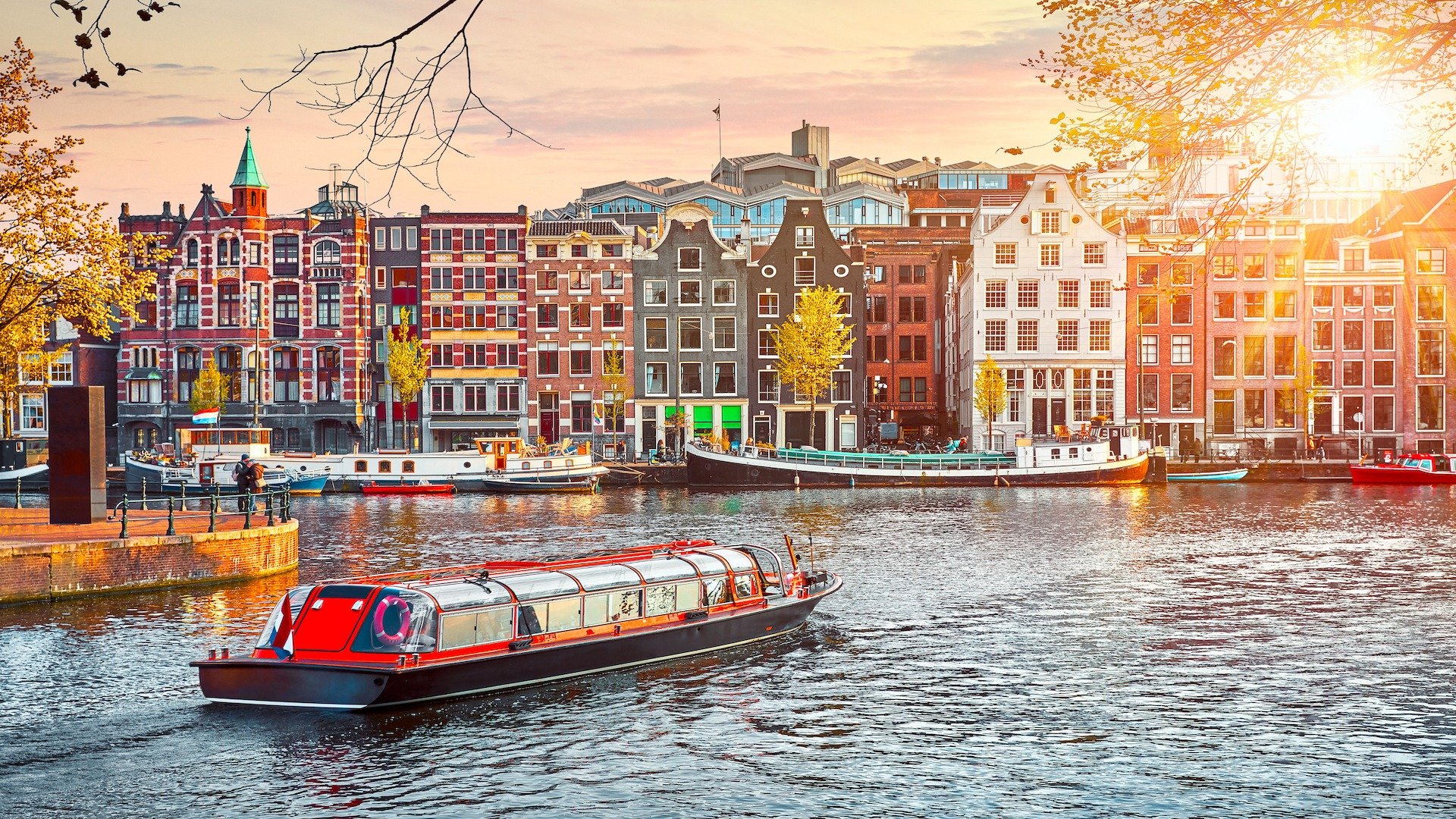
Each layer of this photo adds something to the whole, from the boat in the foreground, to the canal houses in the middle, to the golden light and sky in the background. Everything layered but working together to convey the experience, the time, the place.
The Traveler's Mindset: Overcoming the Simplification Trap
Philosophy Focus: Slower observation creates better memory encoding.
When you look at a subject, your brain simplifies the scene—almost like using a long lens with a shallow depth of field—everything behind your point of focus becomes an indistinct blur. This is why many photographers and artists miss layers: you cannot photograph or sketch what you cannot see. Learn to look deep, beyond the obvious. See the whole scene, not just what you are currently focused on or the most obvious subject. Newspaper photographers from the last century were known to say “f/8 and be there”—in other words, “include a lot of depth and layers in your photos, and be present in the moment and scene.”
To actively experience the complexity of Amsterdam, you need a new viewing habit:
The Double Look: To recognize layers, you must intentionally take two or more looks at a scene. Take one look close to you, one look far away, and mentally connect the elements. You must force your mind to recognize the depth that is there.
Stop Running, Start Composing: Layered compositions require patience and intentional composing. You cannot rush them. Budget travel time for deep engagement—schedule 30 minutes for a drawing or a layered composition, versus 5 minutes for a quick photo.
I teach these observational skills extensively in my Narrative Walks.
The Skill: Using the Layer as Your Experience Checklist
Skill/Takeaway: Equipping the hero with a mental framework to maximize the experience.
A layer is simply a three-level depth structure: a Foreground, a Middle Ground, and a Background. I teach my students to use these three layers as a Pre-Visualization Checklist to maximize the memory being created:
1. The Foreground: What's the Feeling?
The first layer, closest to you, grounds the viewer and adds immediate depth. This layer should answer the question: What's the feeling?
Action: Use a reflection in a canal, the corner of a building, or a detail like a bicycle chain or a cup of coffee. This detail adds a personal touch and immediately pulls the viewer into the scene.
2. The Middle Ground: What's the One Thing That Matters?
This is your main subject—the person, the action, the moment—that drives the narrative. This layer answers: What's the one thing that matters?
Action: The interaction of two people, the expression on a face, the way light hits a specific detail. This element must be clearly separated from the foreground and background to avoid a visual mess.
3. The Background: What Can I Remove?
The final layer provides the context—the historical architecture, the movement of the street, the atmospheric light. This layer answers the question: What can I remove?
Action: This requires you to be the Security Guard of Your Frame. Everything in the background must support the story. Look for a clean ending, use lines to guide the eye, and utilize shadows and light to enhance the separation and dimension of your layers.
The Artifact: Interconnecting Multiple Stories
The true mastery in layering is having a different story going on at each and every depth. This is the difference between a pretty picture and a rich, authentic memory.
Layering allows you to fuse unrelated elements—a café patron, a passing biker, and the distant gable of a famous canal house—into a single, cohesive narrative. It creates a powerful, immersive photograph where the viewer feels like they are moving through the space, experiencing the atmosphere, and witnessing multiple moments simultaneously. This is how you capture the true soul of your experience and travels, the story of your journey.
Ready to master layering? Book a skill-focused tour with me today. My hands-on Photo Tours and Sketching Tours guarantee personalized instruction to transform your next image.