
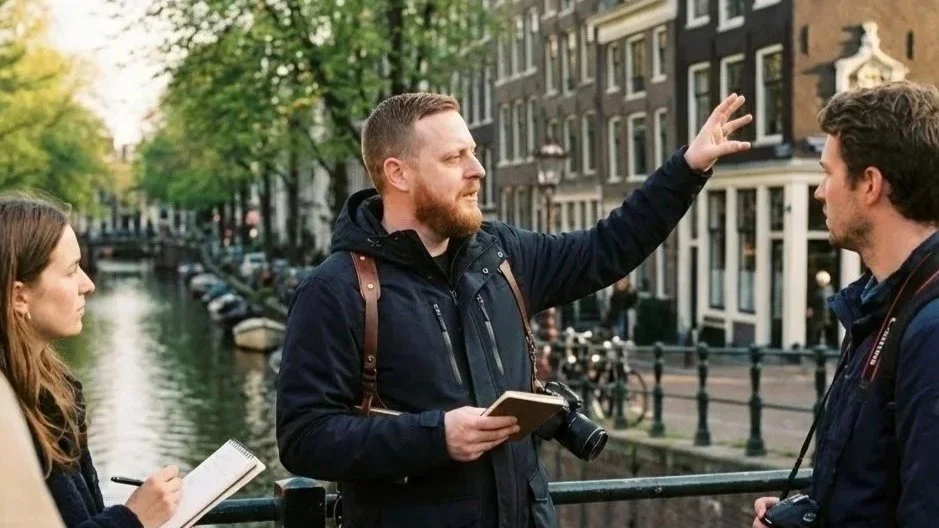
The Intentional Frame
Moving from reactive snapshots to clear intentional vision.
Fusing the fast-paced discipline of wire-service photojournalism with an advanced, professional approach to education. We work side-by-side on the streets of Amsterdam to cut through the visual noise, simplify your technical process, and build a lasting creative focus.
*M.ED. University of Washington

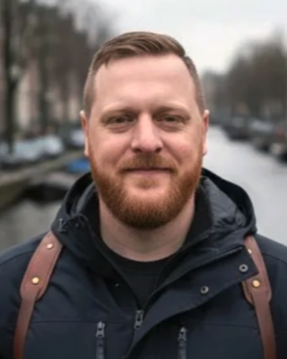
I spent 25 years developing the methods I teach. Skills, patterns of thought, and repeatable processes for navigating high-pressure wire-service deadlines, breaking news, and the deep storytelling of long-form documentary work. I founded Amsterdam Creatief to share these tools, helping other creators get past frustrations and snapshots, and transition into a practice of confident, deliberate observation.
Intentional Observation
When you look at a busy street, it’s easy to get overwhelmed by all the moving pieces. But once you learn how to read the underlying lines, light, and geometry of a city, the environment stops feeling chaotic. Instead of frantically chasing a moment, you learn how to recognize a scene as it forms, using the existing architecture as a natural backdrop for your subject.
This approach connects straightforward teaching methods with the real-world experience I gained on assignment for global media organizations. On the streets of Amsterdam, I work right alongside you as a peer and a guide, focusing entirely on your specific goals.
The ultimate objective is to build a strong technical and creative foundation that belongs entirely to you. I have no interest in asking you to copy my portfolio or see the world through my eyes. Instead, by giving you a reliable, repeatable approach to composition, you will gain the total independence to walk into any unfamiliar city in the world and capture it with absolute confidence.
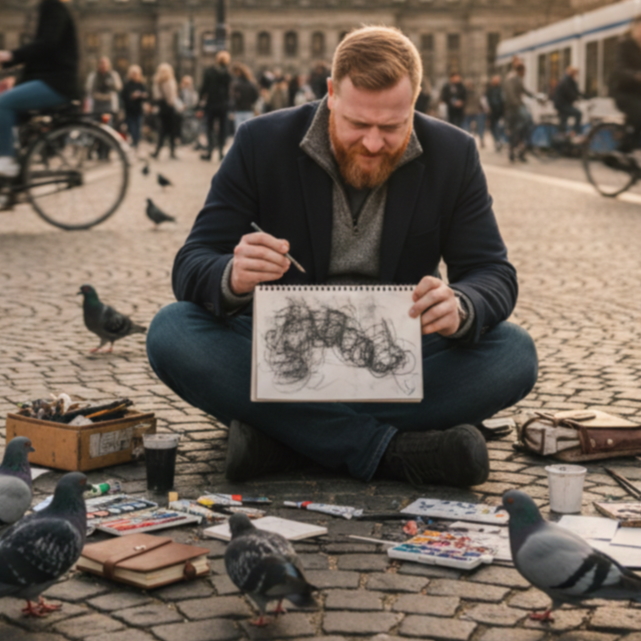
Every field study is a tailored creative partnership designed to build real visual confidence—regardless of your experience level or the tools you choose to use.
II. The Practice of Intent
From Technical Basics to a Cohesive Body of Work
Learning camera settings or the raw mechanics of a sketch pen is a necessary starting point, but the real creative fulfillment comes when you step past isolated exercises. Our sessions are designed to show you exactly how to connect individual field sketches or photos into a meaningful, cohesive collection.
Because my background is in educational design, I structure our time to help you move naturally beyond a standard technical plateau. I handle the logistics, layout, and pacing of our day so you can focus entirely on what matters most: learning to read an environment and compose each frame with quiet, deliberate purpose.
III. A Journalist’s Eye
Practical Methods Under Pressure
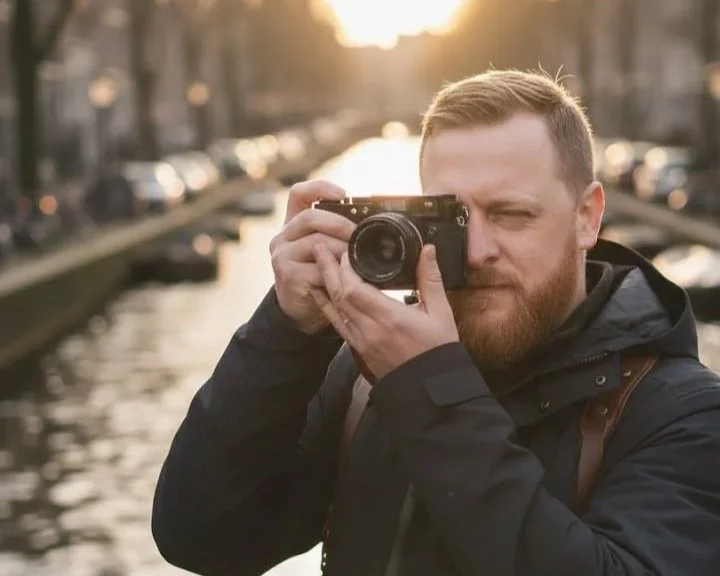
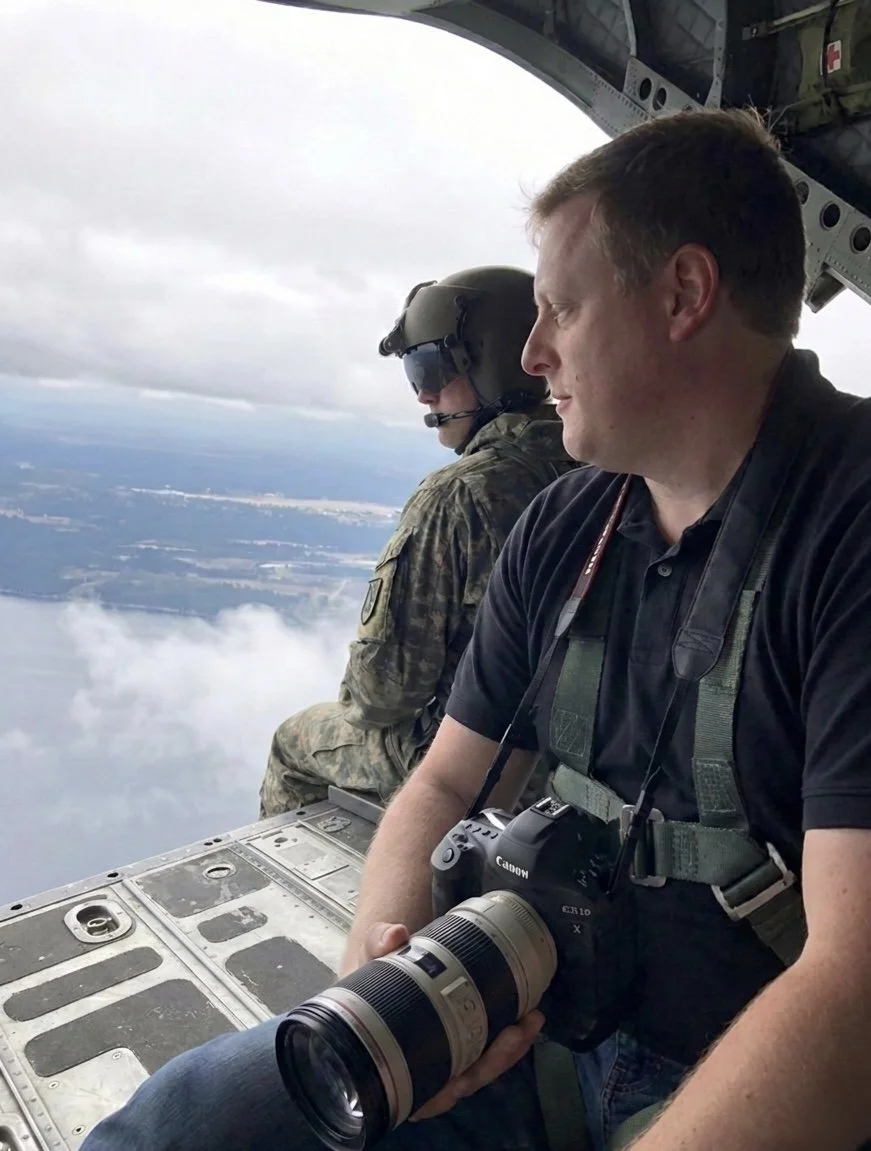
My approach to composition and storytelling was shaped by the fast-paced reality of global photojournalism. Filing images on tight deadlines for news organizations like Reuters and the Seattle P-I taught me that a reliable, structured way of looking at a scene is the best way to cut through visual clutter and find compelling stories. I developed these practical habits because I needed them myself to think clearly and make deliberate creative choices on assignment.
Today, I bring that real-world experience directly to creators who want to sharpen their own work. Beyond mastering the mechanics of a camera or a watercolor brush, our goal is to help you use your tools as a natural extension of your own eye. Together, we focus on slowing down and moving past reactionary choices to build a thoughtful, personal style—a way of seeing that remains a permanent part of your creative toolkit long after you’ve left Amsterdam.


Beyond capturing classic landmarks like the Westerkerk at sunset, you will learn how to read an environment and compose compelling stories anywhere in the world.
We use these real-world approaches to build the skills needed to look at any scene with absolute confidence. Our shared goal is to give you a reliable creative framework that brings your unique artistic vision to life.

My 25 years of experience serves as the practical foundation for our time together. Every field study is focused entirely on cultivating your personal style and building a strong, independent portfolio.
IV. Field Stories:
Transformed Tradecraft
Documenting the transition from reactive capture to structural certainty.
This is the architecture of seeing, applied.
Case Study 001: The Field Clinic
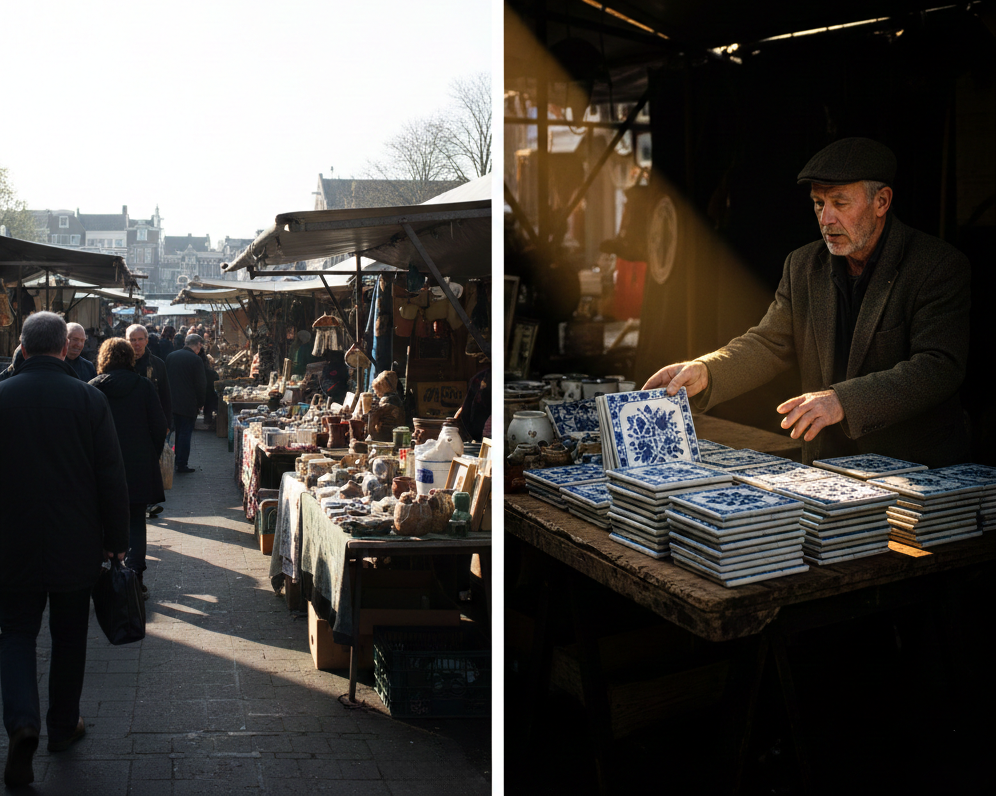
First Frame from Mentorship
Final Narrative
Participant: Jan D.
Study: The Field Clinic
Location: Noordermarkt, Amsterdam
The Transition: From Automatic Settings to Narrative Intent
The Challenge: Jan arrived relying entirely on his camera’s automatic light metering, which left his images looking flat and uninspired in Amsterdam's sharp, high-contrast sunlight. Our goal was to look past what the camera thought was technically "correct" and build a manual baseline—focusing entirely on the deep shadows that actually hold the drama of a scene.
The Approach: We worked side-by-side out on the pavement to anchor exposures directly to the shadows, treating light as an intentional creative choice rather than a generic technical average. By practicing this technique across the busy stalls of the Noordermarkt, Jan cleared away his technical hesitation and learned to use light as a tool for atmosphere.
The Result: Jan stopped second-guessing his camera and started commanding the frame. He walked away with a reliable, instinctive approach to capturing rich, moody lighting on his very first shot.
“I used to fight my camera every time the sun came out. During my class I realized the camera was just a calculator giving me information—I am the editor. I now have a repeatable system to get the exact mood I want on the first shot, every time.” —Jan D.
Case Study 002: Signature Study

Detail from Pre-existing Notebook
Detail of Final Narrative
Participant: Marc V.
Study: The Amsterdam Sketchbook (Signature Study)
Location: Various places around the Grachtengordel, Amsterdam
The Transition: From Detail Obsession to Structural Logic.
The Challenge: Marc felt "choked by detail"—a common creative roadblock where an artist tries to draw every single brick and window pane rather than capturing the actual life and mood of the scene. His work was technically proficient, but it lacked a clear, narrative focus.
The Approach: We worked out in the field to shift his focus from literal copying to clean simplification. By training his eye to spot big shapes first, we used deep ink silhouettes to anchor the underlying structure of the canal bridges. Prioritizing bold lines and high-contrast values allowed the visual noise of the busy street to step back.
The Result: Marc moved from simply recording a location to making deliberate, confident creative choices on the page. His final work beautifully demonstrates the power of leaving details out to reveal a scene's true, dramatic character.
“Jacob’s suggestions pushed me to change how I see the canal. I tend to get focused onto the details and try and draw all the bricks and either give up or end up with a detailed page that feels flat. Now, I am starting to see a few big shapes and tell stories, though I still catch myself wanting to add too much detail.” —Marc V.
Case Study 003: Sara K. - The Masterclass
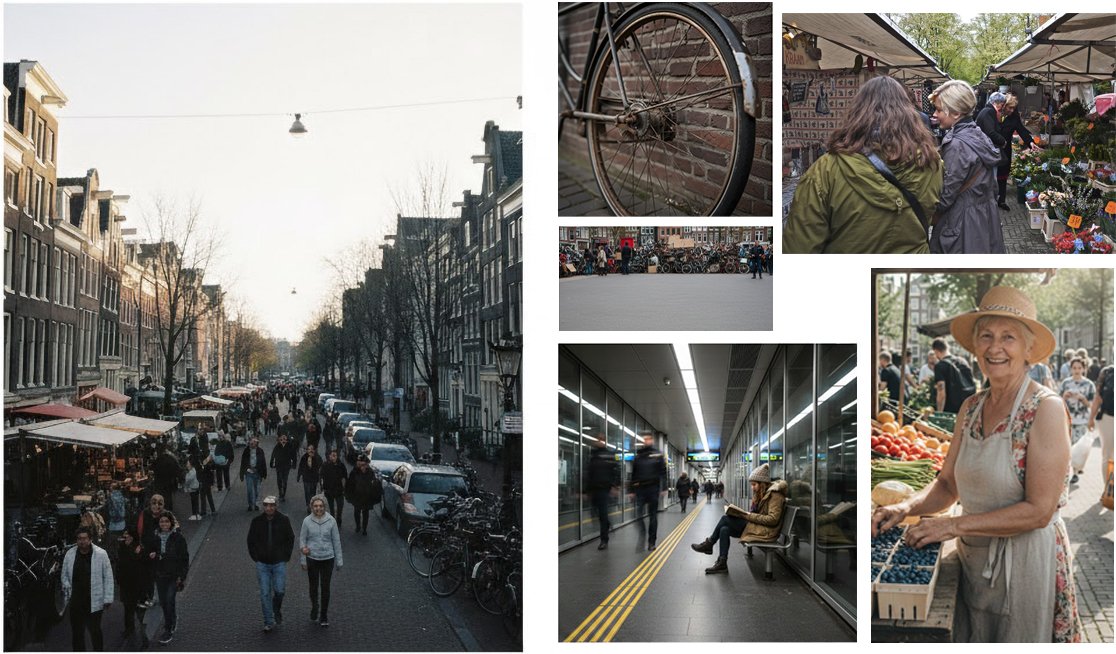
Pre-Mentorship Photo
Final Narrative
Participant: Sara K.
Study: The Masterclass
Location: Noordermarkt, Amsterdam
The Transition: From Reactive Chaos to the Intentional Stage.
The Challenge: Despite having strong technical camera skills, Sara struggled with the visual overwhelm of a crowded city. She found herself constantly reacting to everything happening around her—frantically trying to pack a whole busy street into a single frame out of fear of missing the moment.
The Approach: We worked out in the field to slow her pace and look at the street differently. Instead of chasing fleeting movement, Sara learned to isolate and compose a clean background stage first, using the city's natural architecture and light. By finding and locking in her frame before a subject ever arrived, she stopped running after shots and let the scene come to her.
The Result: Sara stopped hunting frantically for a story and started waiting calmly for human elements to walk into the frames she had already composed. She walked away with a reliable method to break down a busy environment into a beautifully connected, multi-shot visual essay.
“I still feel overwhelmed by how busy Amsterdam is, but Jacob taught me to see the city as a series of pre-built stages and scenes, like a movie set. By establishing my 'anchor' first, everything was easier. I’m working on being an active narrator.” —Sara K.
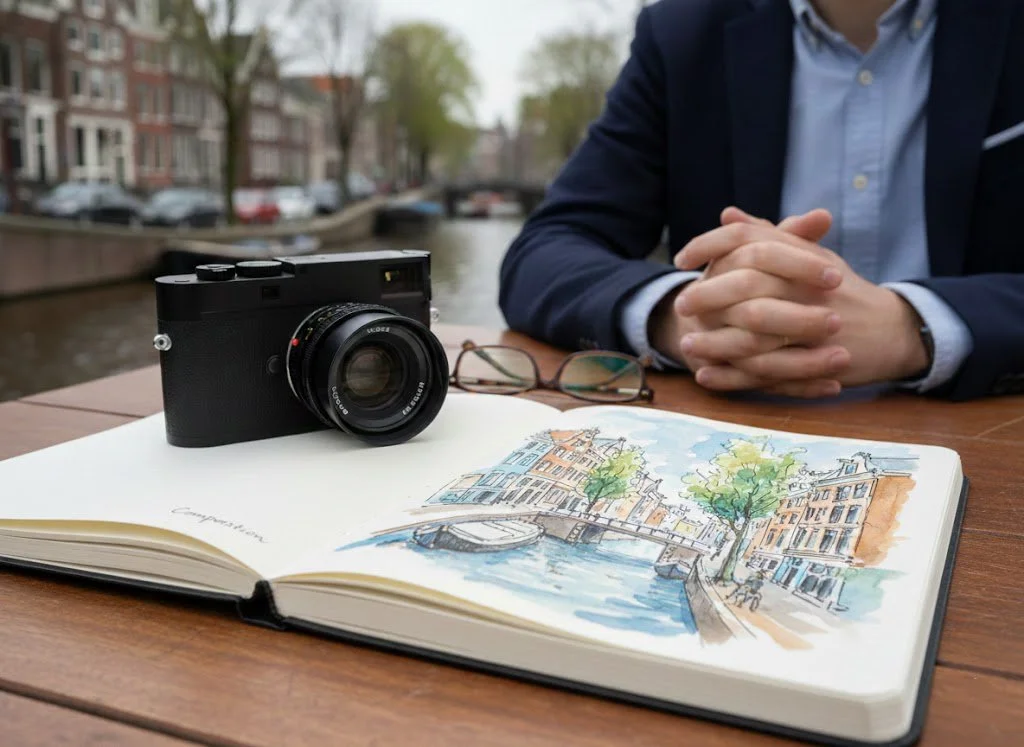
Bridging the city and the page: A signature palette of Schmincke pigments, curated to capture the unique color of the canals, their gables and brick, and the rich depth of Amsterdam's history.
V. The Tools of the Craft
Simplicity by Design
Creative focus is strongest when your tools feel like an extension of your eye. The right gear should quietly support your personal vision, never complicate it. We prioritize classic, minimal tools that let you return straight to the fundamentals of composition and light, placing creative control entirely back in your hands.
The Value of a Slower Pace
Whether you are drawn to the distinct look of a monochrome sensor or the tactile feel of watercolor on heavy paper, your medium changes how you read a city. Working with simple tools naturally encourages you to slow down. By trading automatic settings for a more deliberate approach, you create the mental space needed for a strong visual story to emerge—giving every frame, line, or brushstroke the attention it deserves.
Focus Over Friction
Personally, I choose tools like the Leica M-System and Schmincke watercolors because of their intentional simplicity. They are designed to step completely into the background, letting you bypass complex digital menus and connect directly with the environment around you.
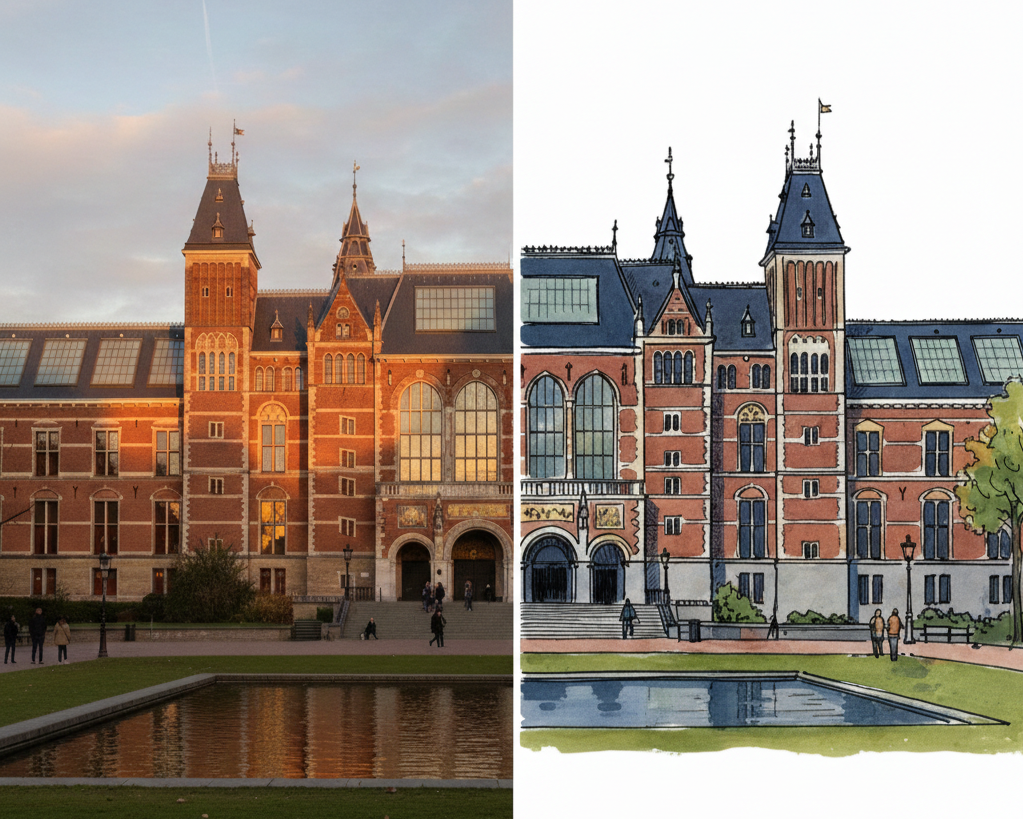
VI. The Final Review:
Understanding Why a Frame Succeeds
A compelling image or sketch is rarely an accident. Every residency concludes with a dedicated final review, where we analyze the composition, patterns, and underlying structure of the work you’ve collected. This collaborative session is designed to ground your intuition in practical principles, clarifying your personal visual style.
Developing an Editor's Eye
We look at your collection as a whole to help you recognize its natural visual balance. You will learn how to look at your own photographs or drawings with a constructive, professional distance—gaining the ability to evaluate your work through the eyes of an editor so that your final results directly reflect your creative intent.
A Lasting Practice
By cultivating this reflective habit, you ensure your storytelling continues to evolve long after your time in Amsterdam. You walk away with a reliable, repeatable method to guide your own artistic growth in any urban environment worldwide.
Your Questions,
Answered
Q: How does an education-focused residency differ from a standard workshop or tour?
Instead of following a rigid, pre-set itinerary or a quick technical overview, these sessions are built from the ground up around how people actually learn. With a background in educational design, I structure our days to break down complex creative instincts into clear, practical steps that stay with you long after the residency ends.
For you, this means a completely customized pace tailored to your exact goals. You get to spend your time fully engaging with a beautiful, historic city while steadily building real creative confidence. Every hour on the street is designed to help you master a specific visual skill through supportive, real-time feedback—leaving you entirely free to focus on the joy of creating while I manage the underlying framework.
Q: How does a background in teaching apply to urban sketching?
Drawing on a busy street can feel overwhelming when you try to capture every single detail at once. I use structured learning principles to help you simplify exactly what you see. We learn to look through the busy layers of a scene and break down intricate Dutch architecture into manageable shapes, lines, and shadows. This turns sketching from an intimidating technical exercise into a relaxed, confident, and deeply personal expression of the city.
Q: What is your philosophy on staging and street photography?
I look at the street through a completely candid, documentary lens. The daily rhythm of Amsterdam is incredibly rich on its own, so we focus entirely on training your eye to spot the quiet stories, natural geometry, and beautiful light already happening around you. We evaluate your work based on how clearly your compositions bring those authentic moments to life, creating a meaningful, lasting record of what you actually experienced.
Q: Is the instruction focused on specific camera brands or sketching styles?
Not at all. The core principles of composition, light, and observation apply to absolutely any tool you choose to use. While I personally choose manual Leica cameras for their minimal design, the creative habits you build here translate perfectly to any medium—whether you shoot with a modern digital sensor, classic film, or paint with watercolors. The focus stays entirely on your unique eye, not the equipment.
Q: Why is Amsterdam the primary classroom for these residencies?
Amsterdam is a masterclass in intentional design. Every canal, bridge, and historic brick gable was deliberately planned and built with a clear purpose. Even the very ground it was built on was reclaimed from the marshes and waters of the North Sea. Moving beyond the familiar postcard views, we use the city’s unique geometry, soft maritime light, and rich layers of history to practice visual storytelling. Learning to slow down and find order in a vibrant, complex environment like Amsterdam gives you the creative confidence to capture any street or city on Earth.
A narrative begins with a single frame.