Ten Creative Ways to Use Sub-Framing
My Guide to Powerful Composition
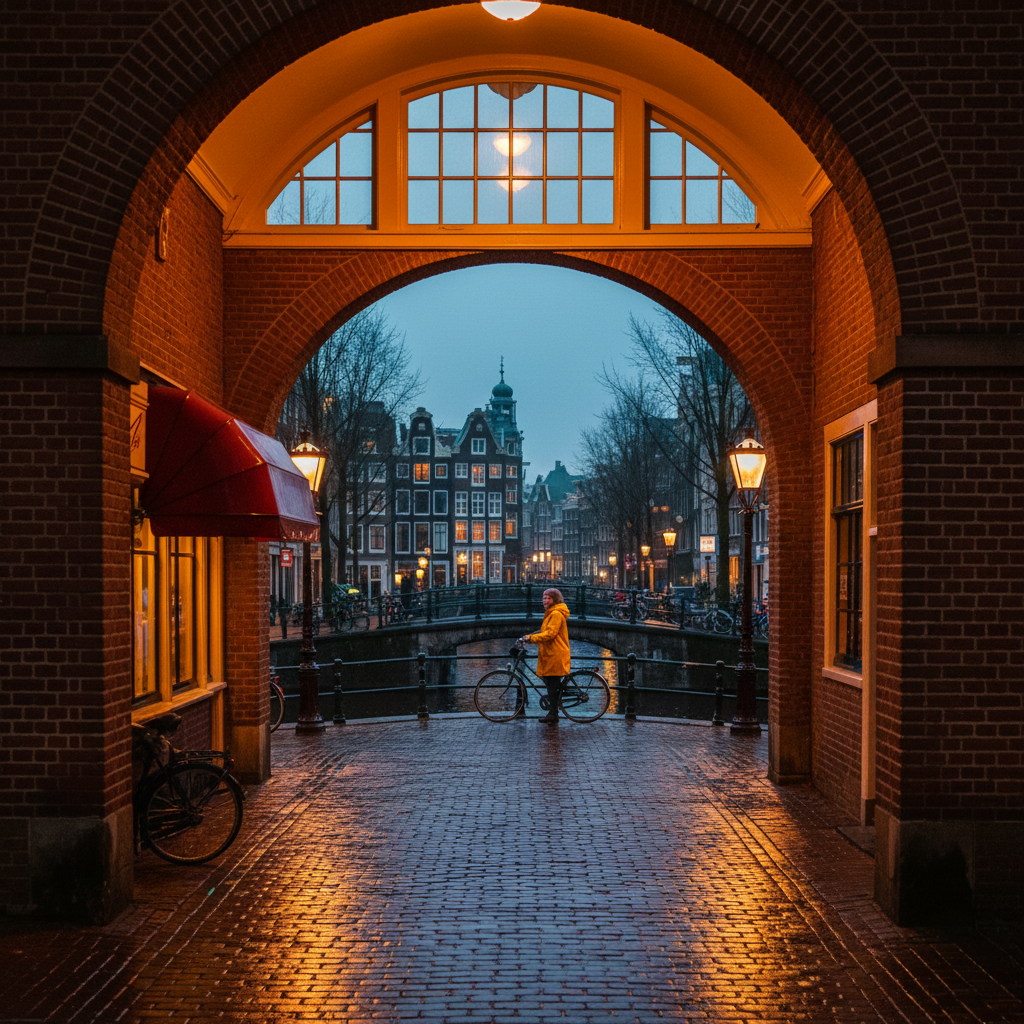
Sub-framing is one of the most powerful compositional tools you have to control where your viewer’s eye goes. In its simplest form, it means using an element already within your scene to create a "frame" around your main subject. This technique immediately draws the viewer into your story, adding layers of structure, depth, and essential context to your travel photographs and urban sketches.
While the classic examples involve windows and doorways, your imagination is the only true limit to what you can use as a frame. Read on and I'll show you how to draw the viewer's eye into your story.
Practice, Learn, and Internalize: Creative Sub-Framing
To truly master sub-framing, you must internalize the skill so that you instinctively spot these opportunities in the moment. This is why my tours focus on hands-on, active learning—not passive sightseeing.
Here are ten creative ways I teach my clients to employ sub-framing in Amsterdam:
1. Classic Architectural Frame: Use the natural openings the city provides. Doorways, windows, gates, or arches found along the canals immediately draw attention to your subject, providing structure and a clear focal point.
2. Natural Elements: Use the environment to create a soft, contextual border. Think of overhanging tree branches or even shadows cast on a cobblestone street. This is perfect for providing a sense of scale and place in a landscape or park scene.
3. Structural Context: Go beyond simple openings and use the major built structures of Amsterdam to frame your subject. Use the columns of a building or the span of a bridge to frame a person or a detail, clearly establishing the sense of place and scale.
4. Negative Space: Use emptiness—a large expanse of grey sky (common in the Netherlands!) or a simple, empty wall—to isolate and draw attention to your subject. This minimalist technique forces the eye directly to the small detail that stands alone against a simple background.
5. Light and Shadow Contrast: Use the contrast between bright light and deep shadow to create a natural, dramatic frame. For instance, spotlighting a subject in a darker alley and exposing for the highlight makes the areas around them fall into darkness, creating a contrast frame.
6. Patterns and Repetition: Use recurring elements like a row of identical bricks or a repeating pattern of bicycles to form a frame around a single, unique subject. The repetition draws the eye in, and the interruption of the pattern (your subject) is what the viewer focuses on.
7. Reflections (Mirrors and Water): Reflective surfaces, especially rain puddles or glass store windows in the city, offer a visually compelling way to frame. The reflection or the frame of the glass directs attention while adding complexity and mystery.
8. Other People: Use bystanders, passersby, or crowds as organic frames to focus on one individual. Framing a person standing between two onlookers effectively uses depth and visual context to make your main subject pop.
9. Objects and Props: Look for movable or easily manipulated objects to create your frame. Use the space between the spokes of a bicycle wheel or a strategically placed café sign. This forces you to be imaginative and adds unique context to your image.
10. Umbrellas: Umbrellas are a powerful, immediate sub-frame, especially on a rainy day. The arc of a single umbrella’s canopy or multiple colored umbrellas can create an immediate visual boundary that perfectly focuses attention on the person or scene below.
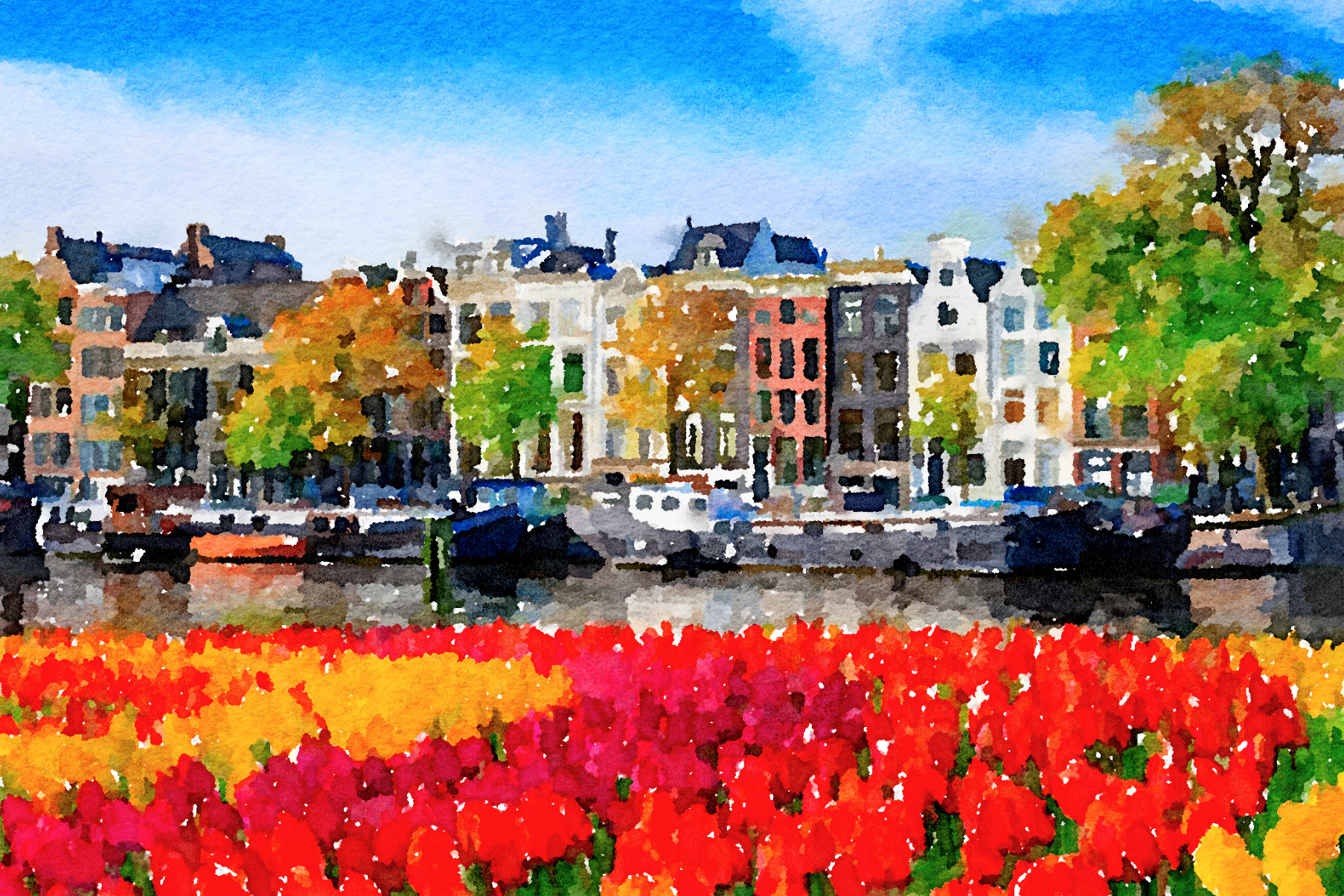
Here, the ubiquitous dutch tulips create a bottom frame and context for the rest of the canal scene.
Stop Looking, Start Seeing—Book Your Masterclass
Sub-framing is only limited by your imagination. Next time you are exploring, don't limit yourself to the obvious shot. Look around and ask, "What in this scene can I use to frame my subject and bring the viewer straight into my story?"
The best way to turn this list of concepts into an internalized skill is through practice with expert, personal feedback. My Photography Tours and Urban Sketching Tours are designed to help you not only understand these rules but practice them immediately in an inspiring setting, transforming you from a passive observer to an active creator.
Book your tour today, invest an hour or so, and improve your entire trip. For an even deeper dive into compositional mastery tailored just for you, consider my Bespoke Private Curriculum.