New City? Crowded Spaces?: Finding Beauty in Overwhelming Locations
Forget searching for the perfect backdrop. When you’re new to a city or location, knowing where to look can be overwhelming. The real secret to stunning art isn't finding a perfect, beautiful location (though that helps)—it’s knowing how to create beauty wherever you are, and to find the story of your location.
From a cluttered alley to a plain street corner, the most unlikely spots can become a stage for incredible photos or sketches. All you need are a few powerful techniques to see past the mundane and capture the magic. (If you want to immediately start developing your vision, consider a Narrative Walk.)
1. Control the Focus, Command the Viewer
For Photography: Blur the Chaos with Aperture
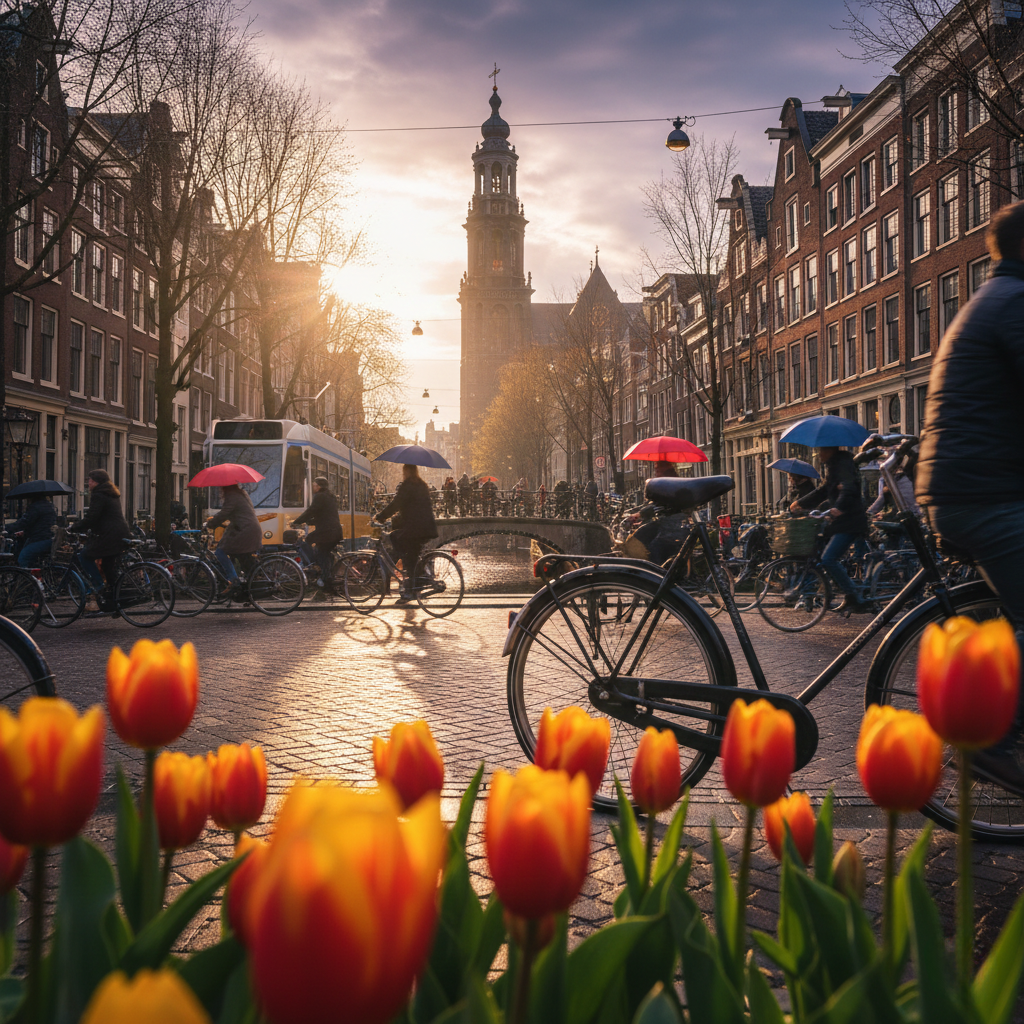
Your lens is your most powerful tool for hiding what you don't want people to see. By using a prime lens and shooting with a wide aperture (f/1.8 or f/1.2), you can completely blur the background into a soft, creamy wash of color. This effect, known as bokeh, instantly erases distracting clutter and isolates your subject, giving your photo a clean, professional feel.
For Urban Sketching: Simplify and Vignette
In sketching, you have a powerful additive skill: the blank page. Use it. Instead of drawing every element, vignetteyour scene—drawing your subject (a canal house, a figure) in sharp detail, then letting the lines fade away to white space as you move toward the edges of the page. This is a fundamental concept for artists—to learn more, explore our resource on Looking with Layers.
2. Manage the Light, Transform the Scene
For Photography: Take Control with Off-Camera Light
Ambient light is fine, but if you really want to command the light, you need an off-camera flash. This allows you to overpower the harsh sun or create a striking separation between your subject and the background. This ability to work with challenging light is also why you should never fear a cloudy day—read my perspective on Bad Weather = Better Art.
For Urban Sketching: Master the Wash and Shadow
You can use light and shadow to simplify a scene by merging distracting elements. Simplify values by applying a uniform light wash over busy background areas. Then, use strong, defined shadows only around your subject to create the Chiaroscuro effect. If this mastery of value appeals to you, consider a Sketching Tour, where we focus heavily on watercolor and ink wash techniques.
3. Frame the View, Structure the Story
For Photography: Use Natural Frames and Leading Lines
Look for natural frames and lines to guide the viewer’s eye. A broken doorway, a low-hanging branch, or a reflection can become a unique sub-frame in your shot. These foreground details add depth and texture, making the photo feel more layered and intentional. To learn more ways to build complex depth, check out our guide on Looking with Layers.
For Urban Sketching: Subtract and Refine
Because sketching is additive, your power lies in subtraction. When standing in a cluttered location, you are free to move, skip, or simplify objects to create a cleaner composition. You can eliminate distracting objects or reduce details to cohesive shapes. This is a key step in Developing Your Artist's Eye and finding your personal voice.
4. Shift Your View, Unlock New Angles
For Photography: Change Your Physical Perspective
Don’t just stand there and shoot. Get on the ground. Climb up on a ledge. Shoot through something. Changing your angle can completely transform a boring location. By simply shifting your point of view, you can hide what you don't like and reveal a whole new side of the location. If you want a hands-on masterclass in composition and angle, join a Photo Tour.
For Urban Sketching: Prioritize Scale and Focus
You don't need to capture the entire scene—only the most compelling part of it. Change your scale by getting up close to one specific object and blowing it up to fill the page, letting the background blur into abstraction. This forces intense observation and is a core principle in the Power of the Pause.
The next time you’re in an "ugly" weather, or an overwhelmingly new spot, don't just see a boring wall or a busy street. See a canvas ready for bokeh or a scene ripe for a creative angle. The world is full of amazing shots and sketches—you just have to be willing to look closer.