The Power of the Pause
Why Sketching Amsterdam Makes You a Better Traveler.
I teach that the true artifact of travel isn’t a photo—it’s the memory you create when you slow down to appreciate the experience.
In our modern travels, we treat time as a checklist. We rush from landmark to landmark, camera snapping, accumulating photos but often failing to genuinely connect with the space around us. We are collecting postcards, not creating true memories.
If you are seeking a deeper, more intentional way to experience Amsterdam, you need a practice that forces you to slow down and truly see. You need Urban Sketching.
As your mentor, I teach that the simple act of putting pen or brush to paper is the most powerful method for embedding a memory. It is the ultimate antidote to the "tourist rush."
1. The Sketching Gap: Trading Speed for Soul
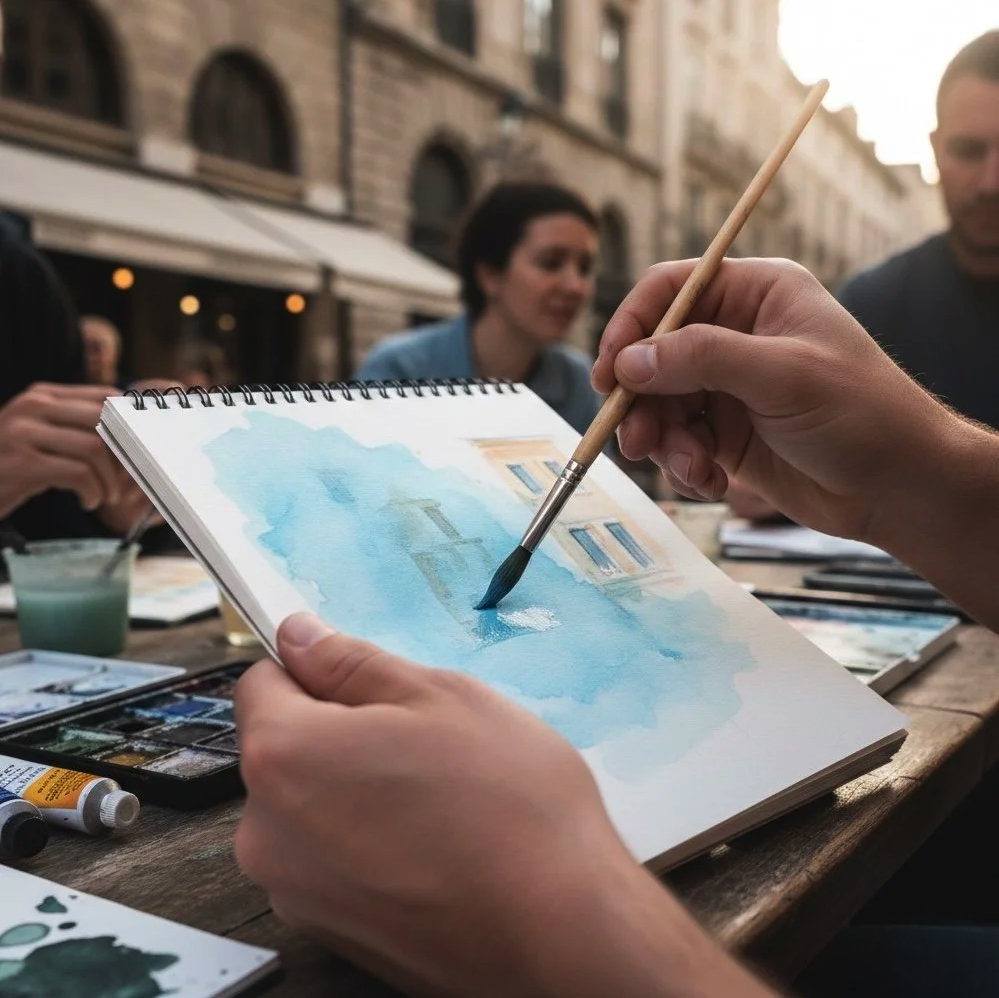
When you take a photo, the process takes a fraction of a second. Your brain captures the image, but the memory encoding is shallow. When you commit to a 15-minute sketch, the process changes fundamentally:
You Become an Engaged Observer: You must analyze the way the light hits the gable, the exact angle of the canal bridge, and the subtle color of the brick. You move from passive viewing to active, intentional engagement.
Memory Encoding: Because your brain must actively process line, shadow, shape, and structure over time, the memory you create is deeper, richer, and more detailed. The finished sketch is a tangible artifact of that deep experience.
I lead hands-on Urban Sketching Tours designed specifically to train this deeper observation skill.
2. Composition as Connection: Finding the Story
Many feel overwhelmed when sketching a complex scene. I simplify the process by focusing on compositional fundamentals that force connection:
Framing the Feeling: Unlike a photo where you might frame the sight, in sketching, you frame the feeling. Use negative space to emphasize a quiet corner, or use the dense lines of a parked bicycle to emphasize the chaotic energy of fietscultuur.
The Power of Omission: A sketch requires you to choose what to leave out. This decision-making process—what is essential to the story and what is not—is a form of authorship. You are editing reality to tell your best travel story.
Embracing Imperfection: The smudge of a passing rain shower, the slightly wonky line of a building—these are the authentic marks of the experience. The finished art isn't about technical perfection; it's about the emotional truth of the moment.
3. Watercolor Washes: Capturing the Lowland Light
Amsterdam's light is soft, diffuse, and often filtered by clouds. This can be challenging for photography, but it is perfect for developing a nuanced eye for color and light in sketching.
The Observation Exercise: Before touching the paper, I ask my students to identify the subtle color shifts in the water, the reflections on wet pavement, and the muted tones of the sky.
Creating Atmosphere: A loose watercolor wash is the ideal tool for capturing the mood of the day—the gezelligfeeling of a café interior or the misty melancholy of a rainy canal. You are painting the air, not just the object.
My Sketching Workshops focus intensely on watercolor and light techniques, guaranteed to accelerate your skill acquisition.
The final sketch is more than art—it’s a memory you can literally hold. You have actively processed the architecture, the light, and the emotion of the scene.
Stop rushing past the magic. Invest in a skill that forces you to pause, observe deeply, and create a truly authentic artifact of your journey.
Book a small-group Sketching Tour with Jake today and transform your next trip.