Structural Geometry and Translucent Layering: Botanical Studies
Line-and-wash mechanics, fine pen control, wet-on-dry pigment layering.
Botanical studies are the ultimate proving ground for line-and-wash watercolor techniques. Before tackling complex canal brickwork or shifting street light on location, field studies of living organic forms build the essential muscle memory for proportion, foreshortening, and edge control.
In these spreads, two distinct structural challenges come into play:
1. Line Weight and Pigment Control (Sarracenia Pitcher Plants)
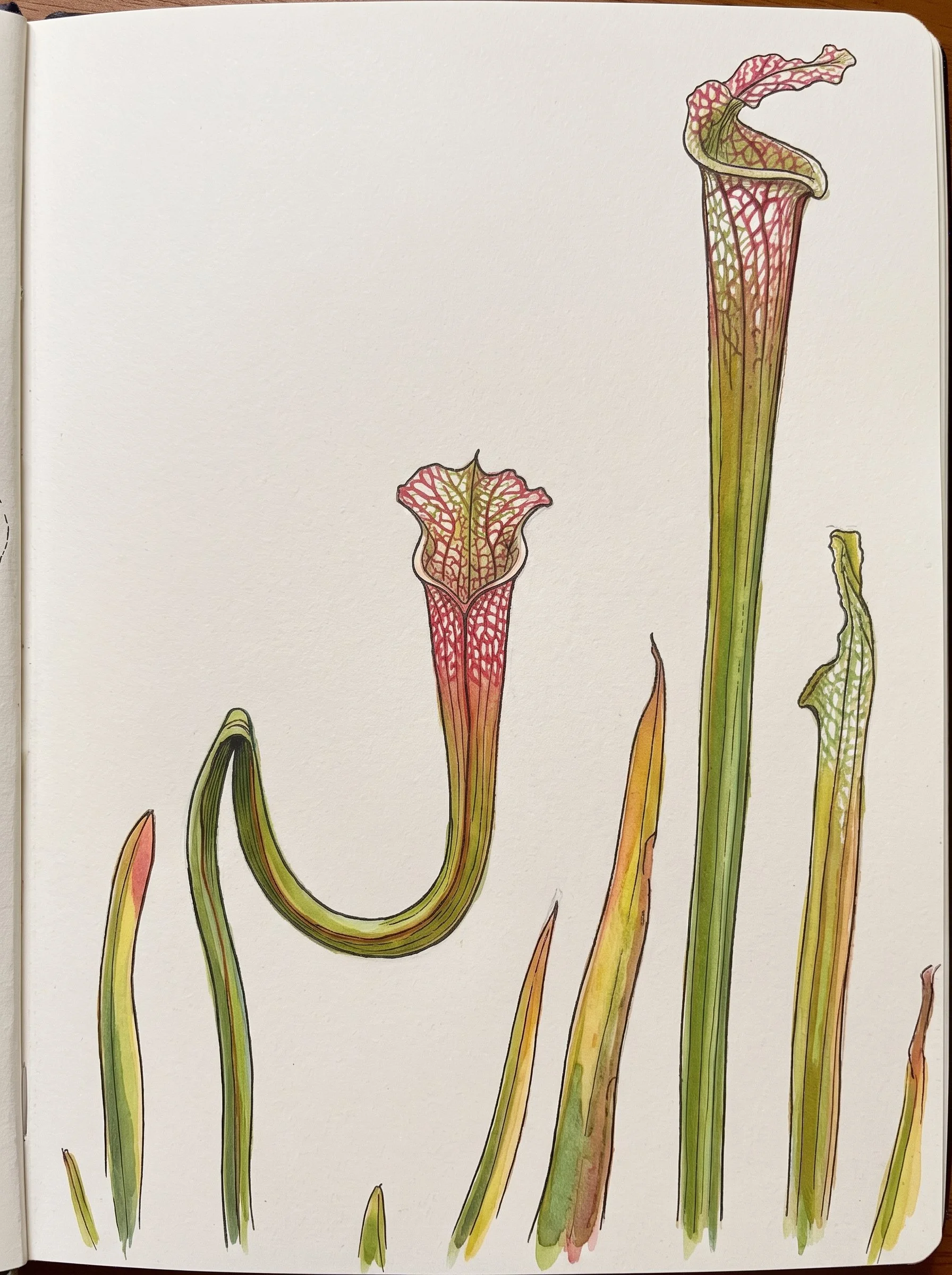
Rendering the slender Sarracenia requires extreme discipline in line weight. A razor-thin pen touch isolates the intricate crimson veining on the hoods without overpowering the form. To capture the tubular stems, single-pass watercolor washes are laid down to preserve luminous highlights, letting the paper work as the light source.
2. Foreshortening and Translucent Layering (Victoria Giant Water Lily)
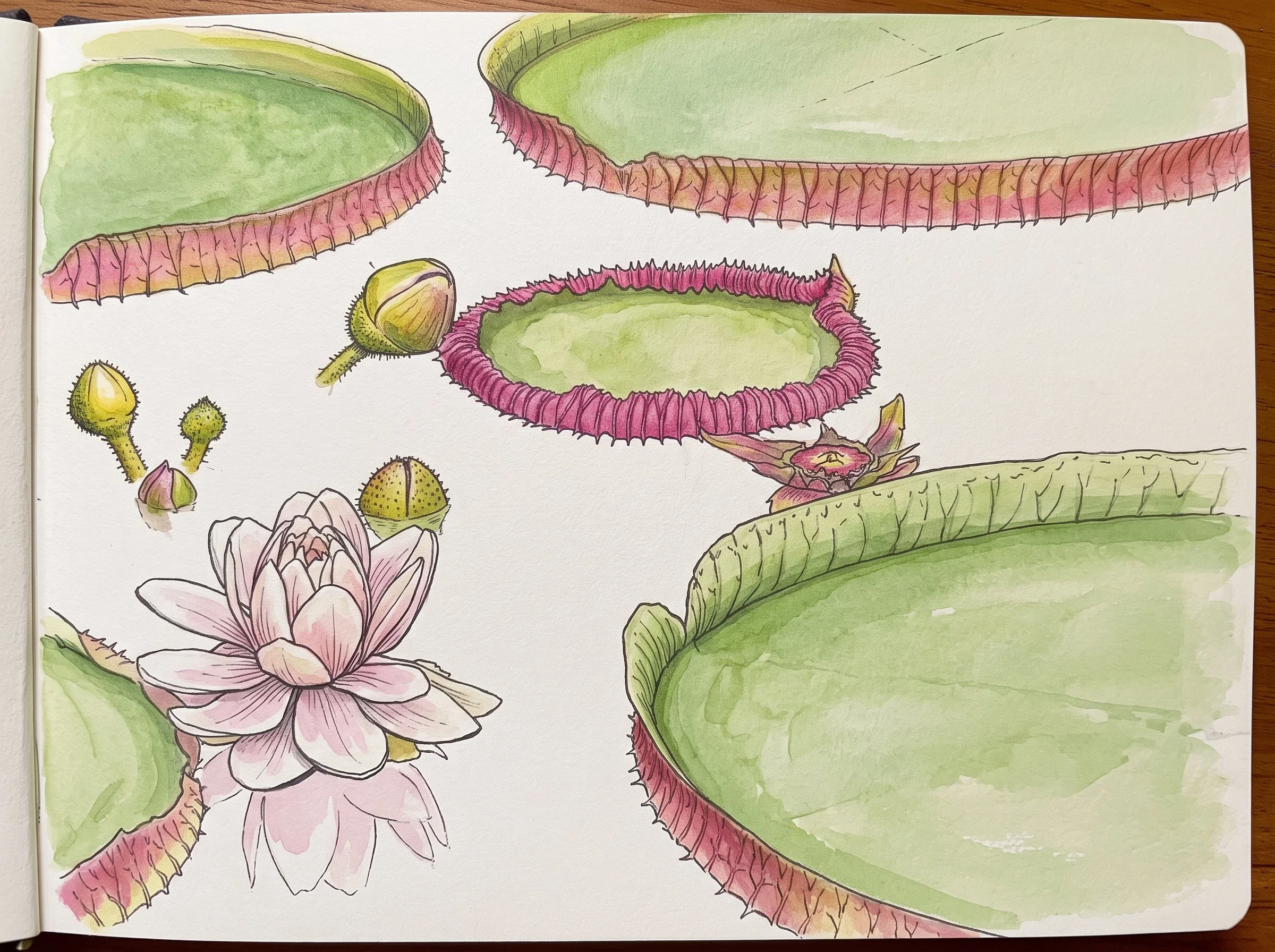
The wide, horizontal planes of the Victoria lily pads present a pure foreshortening puzzle. The warm, spiny crimson rims lift the green interior pads off the water, establishing depth across the page. On the accompanying bloom, delicate, translucent petal washes are layered incrementally to build volume while keeping the white highlights clean.
Whether analyzing architectural geometry on the Keizersgracht or rendering organic structures in the greenhouse, the core principles remain identical: observe closely, control your line, and let the wash breathe.
Master line and wash mechanics, color mixing, and field composition in Amsterdam. Explore Private 1:1 Urban Sketching Masterclasses →