
01. The Field Clinic
Essential Sight. Structural Clarity.
Stop hunting for subjects. Learn to read a city’s scenes.
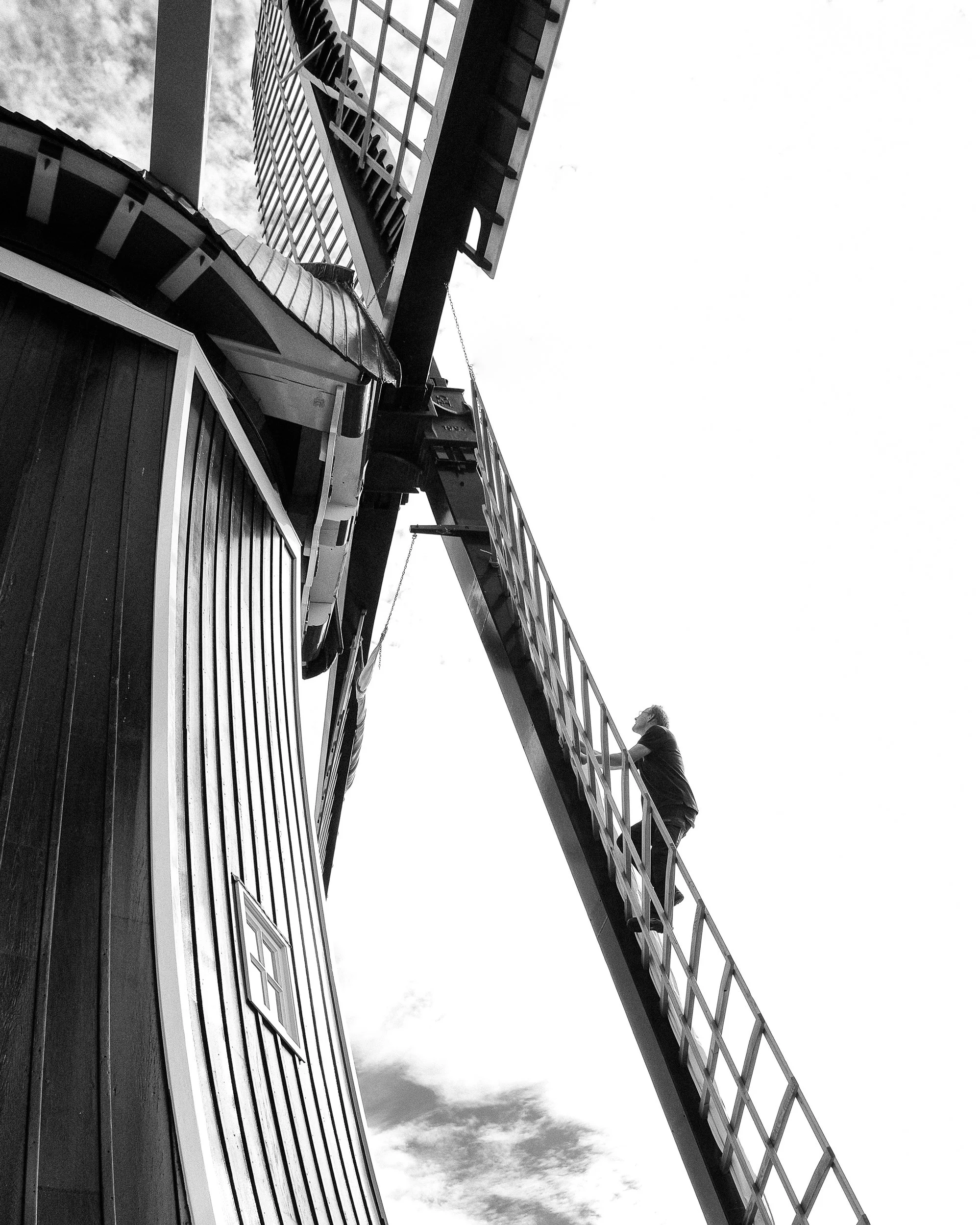
Beyond the Snapshot:
The Architecture of Seeing
This 2.5-hour intensive is a technical and creative reset for the practitioner. Led by Jacob Watrous, M.Ed., we move off the beaten paths to decode the structural logic and historical geometry of authentic Amsterdam.
Leave with a clear way of seeing, a refined visual vocabulary, and the practical skills to:
Simplify Control. Clear away the second-guessing, over-complicated settings and techniques, and reactive habits that disrupt your focus in the field.
Read the Lines of the City. Learn to spot the underlying geometry, light, and balance of a scene before you ever lift your camera or pen.
Compose with Clear Intention. Move past the frantic scramble to catch a fleeting moment, and learn a reliable, intentional approach to telling a visual story.
Field Track:
Street Photography

The Architecture of the Frame:
Learn to see the city not as a crowded rush, but as a living stage. Master the art of focused observation—catching the exact moment the ambient light hits the cobblestones to turn a passing scene into a striking image.
Prerequisites: Basic operational familiarity with your chosen camera or smartphone; no prior formal photography experience required.
Field Skills Developed:
Instinctive Control: Move beyond automatic settings or the struggle of choosing techniques to gain complete confidence over your tools and medium, keeping your process fast, intuitive, and natural.
Creating Visual Depth: Learn to read the street in layers, using foreground elements and natural framing to build a rich, three-dimensional narrative.
Finding Structural Anchors: Develop the ability to spot the permanent lines and shapes that turn a chaotic, moving environment into a balanced, clean composition.
€395 per Field Clinic* • 2.5 Hour Private Mentorship
* 50% discount per student when two enrollees register simultaneously for the same clinic.
Gifted registrations available
Schedule Your Photography Field Clinic · How it Works · FAQs
Field Track:
Urban Sketching
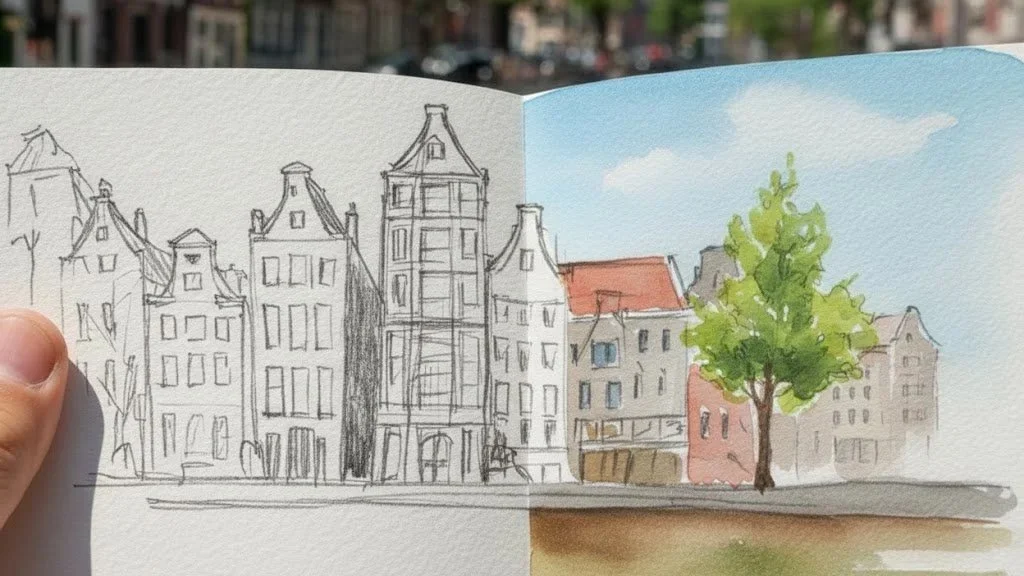
The Art of Simplification:
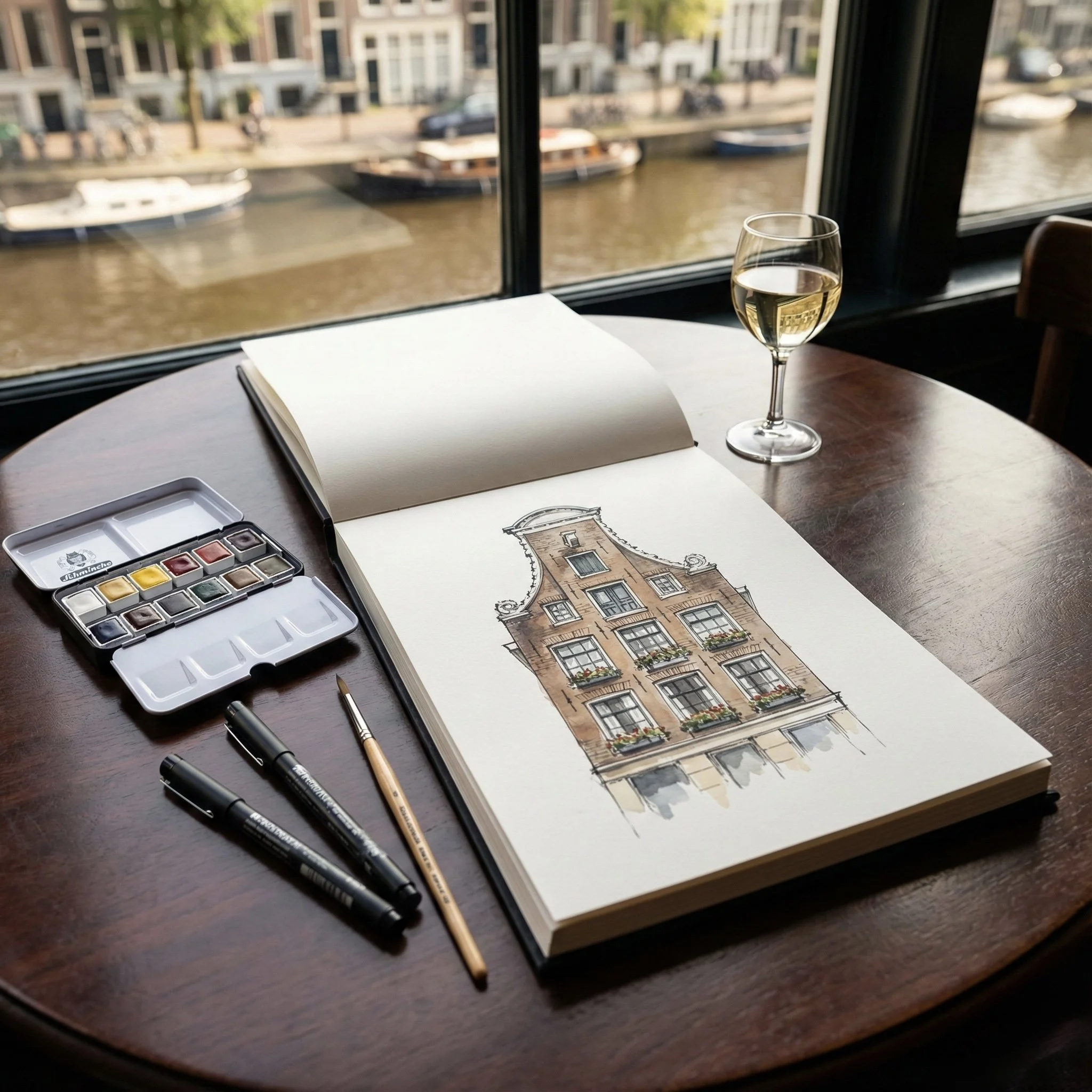
Translate historic masonry, water reflections, and architectural perspective onto the page. Move beyond literal copying to capture the true character, light, and structure of Amsterdam's historic core.
Prerequisites: Basic operational familiarity with your sketching medium; no prior urban sketching experience required.
Field Skills Developed:
The Art of Omission: Learn what to leave out. Master the ability to look past unnecessary visual clutter and isolate the essential, expressive lines that truly define a scene.
Understanding Architectural Lines: Use simple visual geometry to break down intricate Dutch facades, giving your drawings a strong, accurate, and confident foundation.
The Field Notebook: Move beyond casual sketching and learn to use your notebook as a beautiful, lasting record of your observations and creative growth.
€395 per Field Clinic* • 2.5 Hour Private Mentorship
* 50% discount per student when two enrollees register simultaneously for the same clinic.
Gifted registrations available
Schedule Your Urban Sketching Field Clinic · How It Works · FAQs
Two Mediums
One Foundation
Whether you operate a Leica M or a Lamy fountain pen, the underlying tradecraft remains identical. The objective is to move beyond a reactive scramble for quick snapshots and focus on the deliberate act of developing your own clear visual voice.
This approach ensures that your breakthrough isn’t a lucky accident, but a repeatable, practical skill. By learning to see the underlying architecture of the city first, we ensure that your work—regardless of your chosen medium—has a definitive foundation to stand on.
See how the Field Clinic is structured below. ↓
How We Work
A Structured Path from Initial Plan to a Definitive Portfolio
01. The Consultation
Before we meet on the street, we begin with a conversation to understand your current practice, your creative background, and your exact goals. By identifying the specific technical hurdles and artistic blocks currently slowing you down, we ensure our upcoming session is a focused, meaningful study completely tailored to you.
02. The Tailored Roadmap
I translate our initial conversation into a personalized field plan. We map out the specific Amsterdam locations, architectural pockets, and visual themes that best fit your objectives. This removes all guesswork, ensuring every hour in the city is spent with clear artistic intention.
03. The Field Session
This is where theory becomes practice. Moving side-by-side through the historic core of Amsterdam, we look past technical distractions to focus entirely on your visual storytelling. You receive immediate, real-time guidance and critique as you build your images directly on the street.
We conclude by reviewing the day’s work together, narrowing down your photographs into a cohesive selection. We pinpoint the exact moments your personal style broke through and build a practical method to ensure your creative growth remains permanent. Enrollees who successfully meet the learning goals receive an official Certificate of Completion (Certificaat van Deelname).
Certificates of Completion are awarded based on a summative portfolio evaluation at the end of the session, assessing demonstrated competence in composition framing, visual narrative structure, and manual tool control against standard rubric criteria.
While many practitioners secure their study weeks months in advance, the studio is built to match the pace of the spontaneous traveler. Once confirmed, I immediately begin a thorough review of your current work and objectives, ensuring your private curriculum is completely tailored and ready the moment you arrive. Our structured intake process allows for expedited portfolio review and curriculum alignment for short-notice enrollments, subject to schedule availability.
My work begins the moment your session is confirmed.
04. The Synthesis
The Breakthrough in Practice
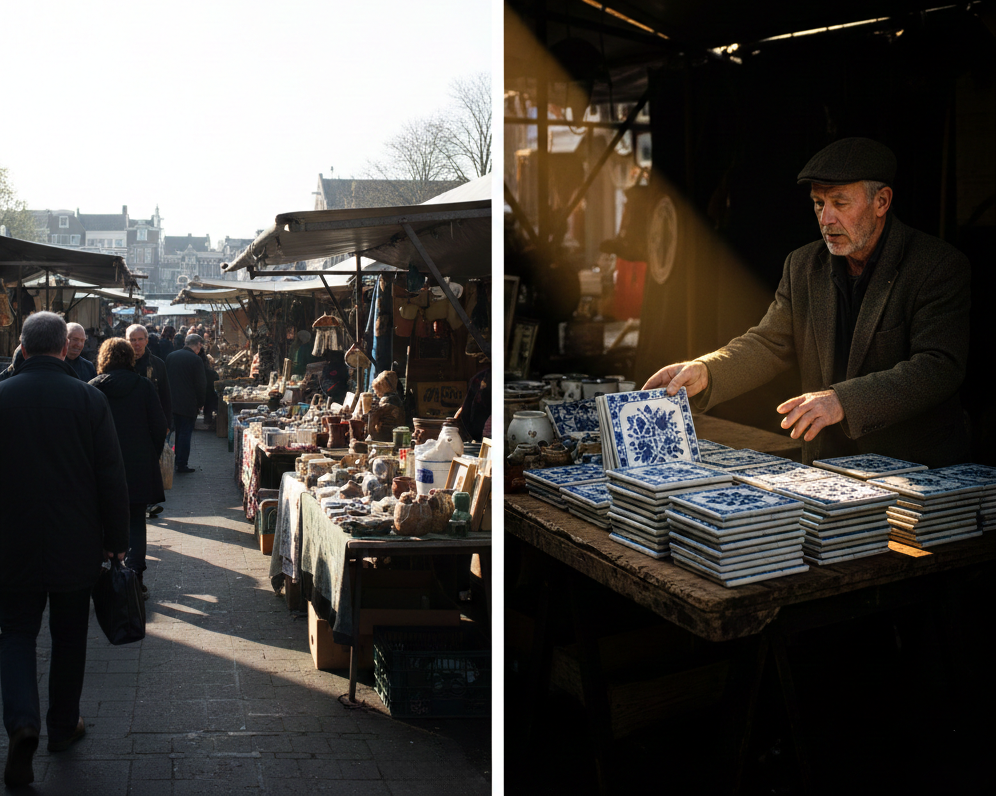
“I used to fight my camera every time the sun came out. During my class I realized the camera was just a calculator giving me information—I am the editor.”
—Jan D.
Reactionary Snapshot
Authored Narrative
Your Questions,
Answered
Q: I am a beginner; is this too advanced for me?
Not at all. Because every session is entirely one-on-one, we adapt the pace completely to your experience. Whether you are learning how to control your manual settings for the first time or looking to sharpen your personal style, our focus is on clearing away your technical hesitation so you can step out onto the streets and create with confidence.
Q: Do I need a professional camera or specific art supplies?
Training your eye matters far more than the price tag on your gear. For photography, you are welcome to use anything from a smartphone to a manual film camera. For urban sketching, everything you need—including a premium kit with curated pigments and archival papers—is fully provided so you can focus entirely on the experience without worrying about what to pack.
Q: How does this differ from a standard photography or sketching tour?
A standard tour simply shows you famous sights. A Field Clinic is a private, hands-on masterclass. Instead of following a crowded group on a pre-set path, you are working side-by-side with an experienced mentor to learn practical field skills. Every session is built around a personalized roadmap based on your creative interests, led by a certified Master of Education (M.Ed.) who knows how to make complex skills simple and memorable.
Q: Is "Reactive Photography" really that bad?
Not at all, but there is a massive difference between frantically chasing a scene and being ready for it. Relying entirely on pure reflexes or a "spray and pray" approach usually just leaves you with a crowded memory card full of accidental snapshots.
Our approach doesn't abandon the thrill of the "decisive moment"; it gives you the steady discipline to capture it with absolute certainty. The legendary Henri Cartier-Bresson rarely relied on pure luck. He would find his "stage" first—the geometry of an alleyway, a shadow, or a puddle—and then wait patiently for the perfect human element to step into his frame.
Our time together transforms frantic shooting habits into a deliberate, instinctive rhythm:
Setting the Stage: Learning to spot naturally beautiful compositions within the urban chaos before the action even starts.
Anticipating the Moment: Reading the flow of the street so you know exactly where a subject will intersect with your frame.
Layering the Scene: Instantly organizing your foreground, midground, and background to give your images incredible depth.
The Intentional Pause: Building the patience to hold the shutter until a gesture or look becomes genuinely meaningful.
Q: What is the "Review" at the end of the session?
We wrap up our session by sitting down together to look over your work. This isn't a harsh academic critique; it's a supportive look at why your strongest images or sketches succeeded, measured against rubrics to help assess and measure growth. We isolate your best frames and talk about how to replicate those results on your own, ensuring you leave with a reliable approach you can bring to any city in the world.
Q: Where will our study take place?
We treat the historic streets of Amsterdam as our open-air studio. While we move through beautiful, character-rich neighborhoods like the Jordaan or the Noordermarkt, the exact locations are hand-selected to match the specific lighting and creative goals we mapped out before meeting. We always prioritize real, atmospheric street corners over crowded tourist landmarks.
Q: I am an experienced professional; can we skip the basics?
Absolutely. Because every study is completely 1:1, there is no generic syllabus to follow. We use your existing expertise as our launching pad and immediately jump into advanced composition, narrative sequencing, and editing at a professional level, matching the depth and pace of your regular work.
01. The Field Clinic
Technical Specifications
Course Name: The Field Clinic
Course Content: Introductory vocational study focused on establishing a repeatable manual workflow for urban observation and technical narrative.
Level: Vocational / Foundational Professional.
Duration: 150 minutes (2.5 hours) of active field instruction.
Objectives: Mastery of concepts and frameworks such as the 6-Step OODA Loop, the “15-Second Pause” and the development of an initial technical roadmap.
Target Group: Practitioners seeking structured technical benchmarks and a disciplined approach to urban documentation.
Entry Requirements: Ownership of a primary instrument (camera or smartphone); no prior educational degree required. For urban sketching bring paper or sketchbook as premium pens, brushes and pigments are provided.
Photography: Camera-Agnostic Requirements The field protocol is agnostic to specific hardware. Whether you operate a Leica M-System, a Fujifilm X-Series, or a smartphone, the focus remains on the manual interface between the practitioner and the environment.
Requirement: Ensure your device is fully charged with sufficient storage for high-volume RAW capture.
Note: We prioritize "Zero-Hoarding" habits; bring the kit you are most comfortable operating at high speed.
Urban Sketching: Minimalist Documentation For those working in ink and pigment, portability is essential for field speed. A minimalist kit prevents "Logistical Drag" and allows for rapid documentation of moving subjects.
Recommended: A portable sketchbook, such as Etchr or Stillman & Birn.
Note: Limit your palette to essentials to focus on structural geometry rather than color management.
Exemption Policy: No exemptions granted (EVC) due to the bespoke and self-contained nature of the curriculum.
Total Study Load:3 Hours total. 30m diagnostic intake and 2.5h applied field study including formative evaluation.
Materials: Includes Personalized Creative Brief (Syllabus) and Evaluation Record. Photography participants provide their own primary gear.
Qualifications: Participants receive an Amsterdam Creatief Certificate of Completion.
Exams & Results: As this is a performance-based vocational study, there are no formal written examinations or resit options. Progress is measured through real-time formative assessment.