
02. Masterclass
Move beyond the single image. Learn the art of the visual sequence.
Schedule Your Masterclass
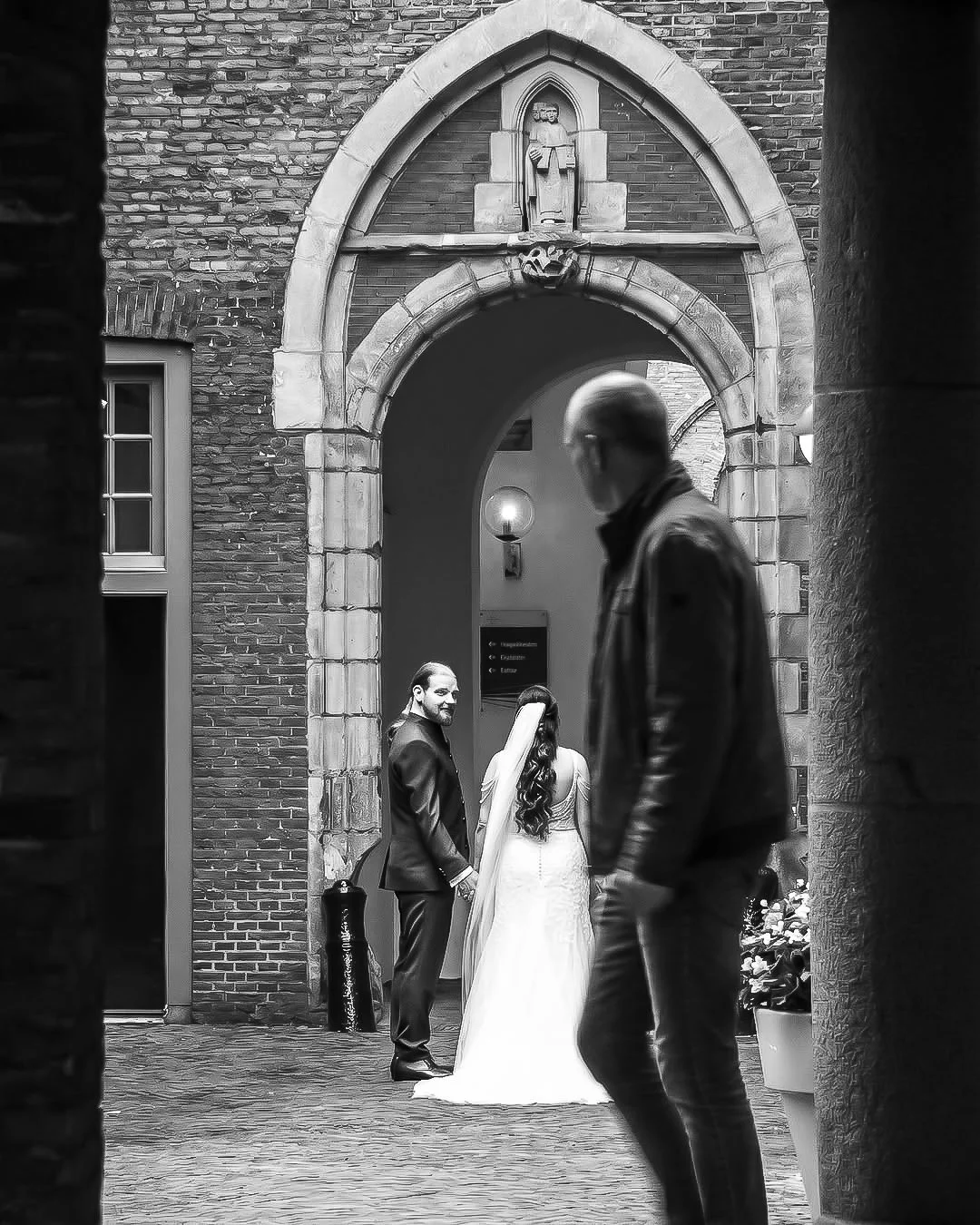
Move beyond the single frame to build a cohesive visual story.
The Field Masterclass:
The Visual Essay
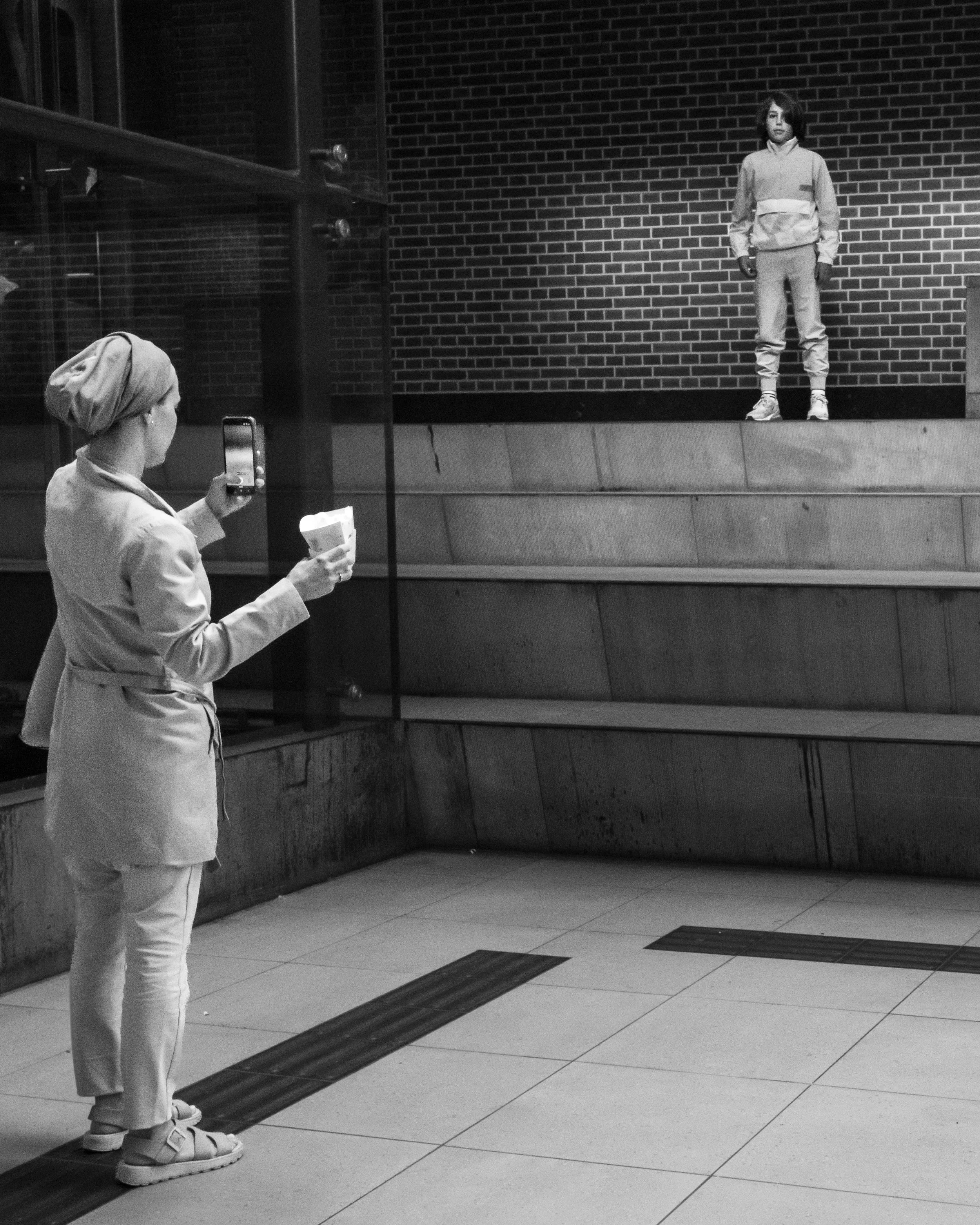
A 6-Hour Field Study
Most field work feels like a reactive chase—a frantic rush to catch a moment before it vanishes. This 6-hour masterclass is a deliberate reset. By learning to see the city as a permanent stage, you stop chasing the light and start letting the scene come to you.
Prerequisites: Competency in operating manual camera settings (ISO, aperture, shutter speed) or basic watercolor/line-work tradecraft.
The Multi-Frame Structure:
We break down the visual essay into a practical, multi-frame sequence. You will learn to capture and connect the essential elements required to tell a complete story with total confidence:
Example:
01 The Anchor: Establishing the architectural and geometric foundation of the space.
02 The Relationship: Showing how people naturally interact with their surroundings.
03 The Gesture: Showing how people naturally interact with their surroundings.
04 The Detail: Focusing closely on the local texture, light, and hidden elements of a scene.
05 The Pattern: Finding the repeating shapes and natural rhythms of the urban environment.
06 The Portrait: A clean, focused study of character in its natural environment.
07 The Transition: Connecting frames that bridge spaces and guide the narrative flow.
08 The Juxtaposition: Showing the striking contrast between the historic and the modern.
09 The Resolution: A thoughtful closing image that brings the visual story to a satisfying finish.
If your work currently feels rushed or disconnected, this masterclass is designed to change your pace—replacing accidental snapshots with a calm, deliberate, and deeply personal body of work.
Mastery of Ink & Light
Whether you operate a lens or a pen, the objective remains the same: transforming a fleeting street scene into a deliberate, permanent narrative.
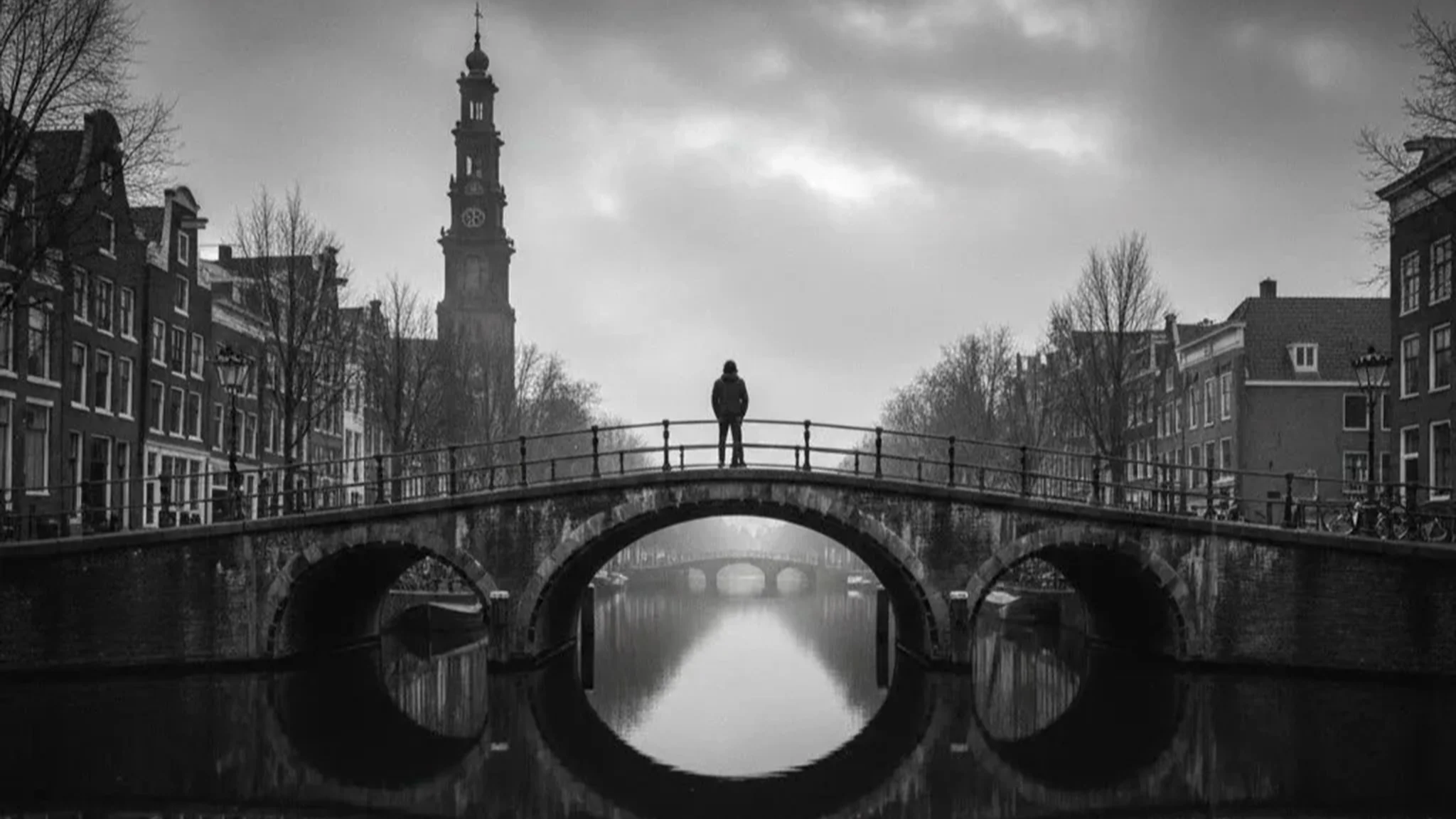
Street Photography
€695 per Masterclass* · 6 hr
Learn to see the city not as a crowd of distractions, but as a structured stage where ambient light, shadow, and architecture align.
Instinctive Camera Control
Move beyond automatic settings to gain total manual command over your frame, eliminating the second-guessing that causes you to miss fleeting moments.
Reading the Scene in Layers
Practice the professional art of stacking your composition, using depth, foreground elements, and natural geometry to build a rich narrative.
The Mindful Pause
Master the internal discipline required to find your frame, steady your focus, and wait calmly for the perfect element to enter the scene.
Schedule Your Street Photography Study
* 50% discount per student when two enrollees register simultaneously for the same Masterclass.
Gift registrations available
A Note on Photography Gear:
We focus on composition and intent, not the brand of your tool. Whether you operate a manual Leica rangefinder, a modern mirrorless system, or a high-end phone sensor, our goal is to simplify your technical process so you can enter the natural flow of the field.
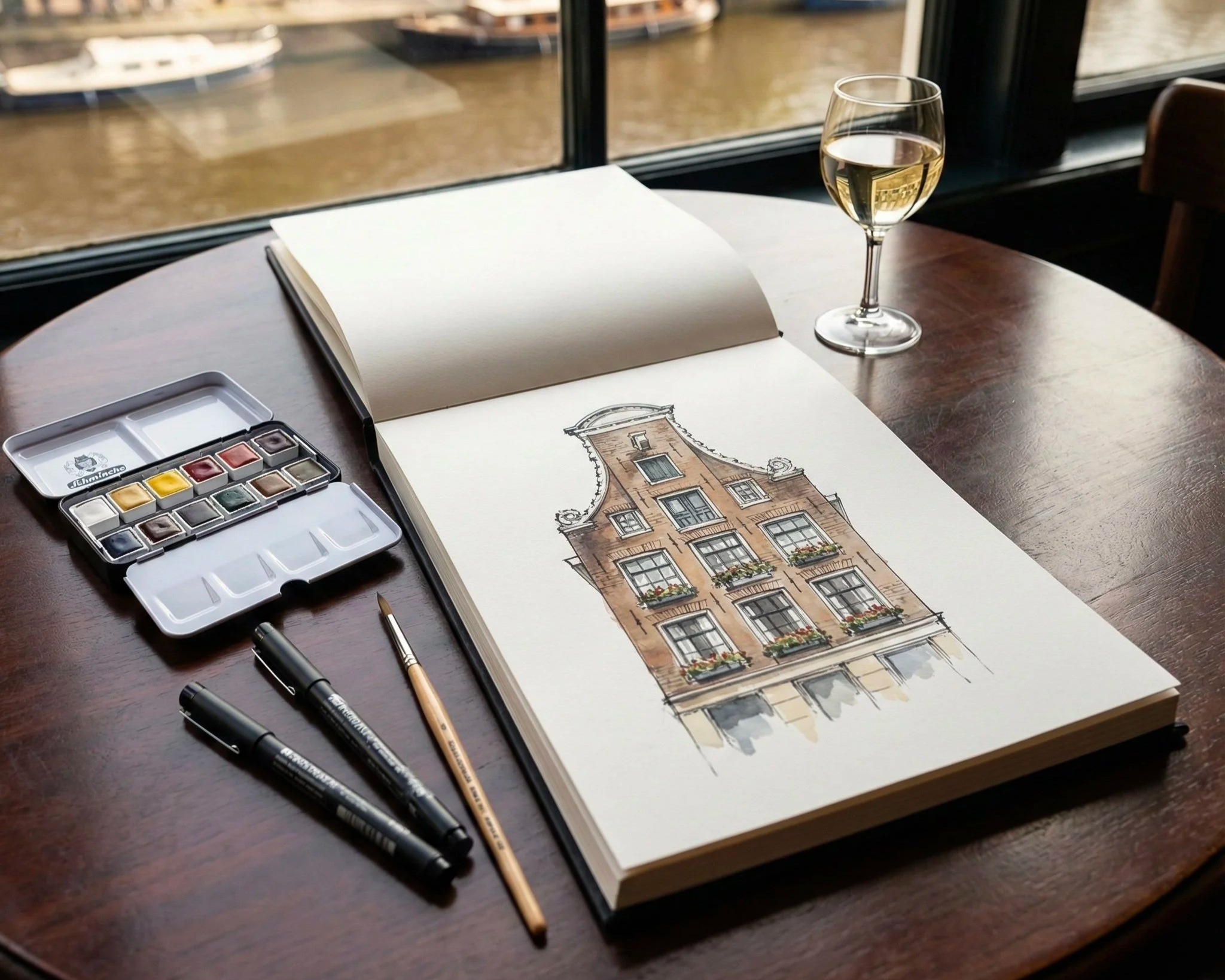
Urban Sketching
€695 per Masterclass* · 6 hr
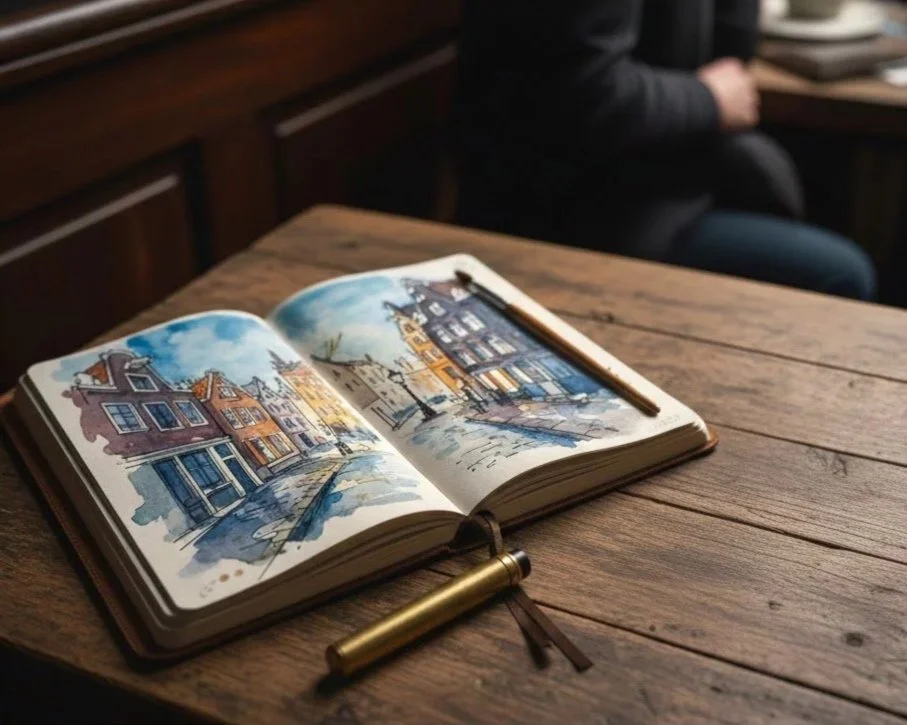
Translate historic brickwork and canal reflections onto the page. We move past literal illustration to capture the true structural essence of Amsterdam.
The Art of Omission
Master the ability to look past unnecessary visual clutter on the street, isolating the powerful, expressive lines that truly define a space.
Architectural Alignment
Use simple visual geometry to break down intricate Dutch facades, giving your drawings a balanced, accurate, and confident foundation.
The Lasting Field Journal
Move beyond casual sketching as a hobby and turn your journal into a beautiful, professional archive of your technical growth and tradecraft.
Begin Your Urban Sketching Study
* 50% discount per student when two enrollees register simultaneously for the same Masterclass.
Gift registrations available
Professional sketching kit provided for use
A Note on Sketching Gear
While we supply a curated palette of professional Schmincke Horadam pigments and archival papers, the focus remains entirely on timeless drawing principles. If you have preferred tools or a personal sketchbook, you are highly encouraged to bring them.
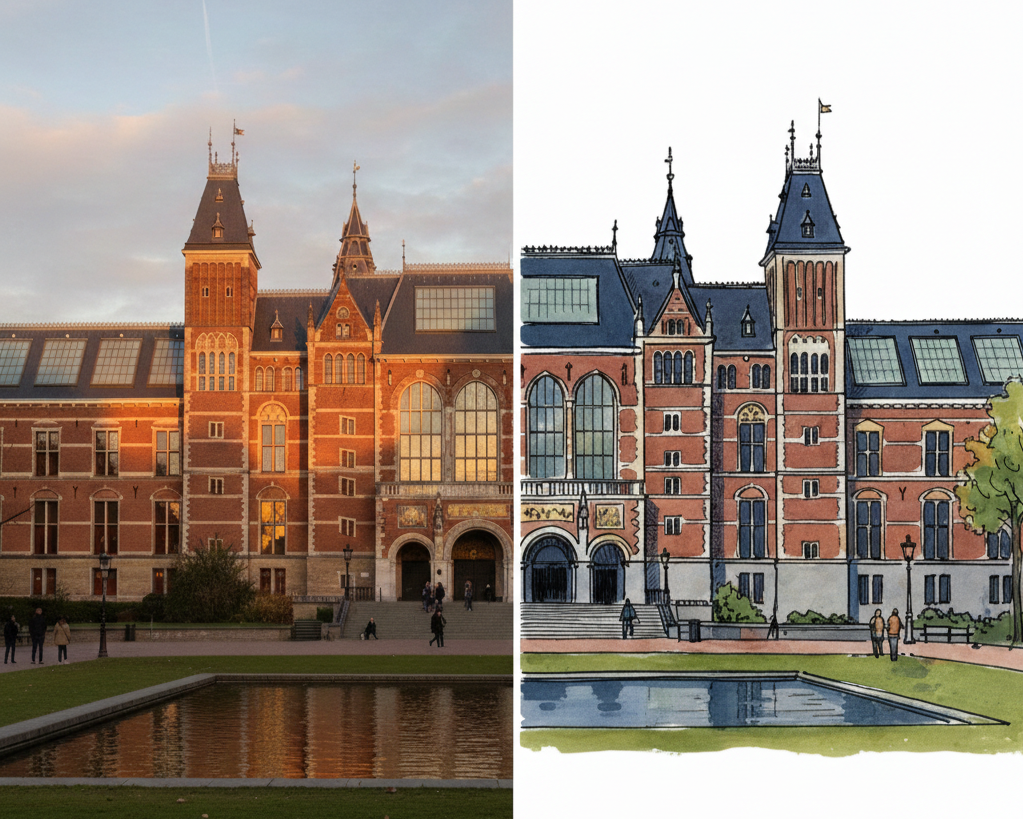
Combined Study (Photo + Sketch)
€695 per Masterclass* · 6 hr
The ultimate application of our core philosophy. We navigate the city with both lens and pen, discovering exactly which medium best captures the character of a scene.
The Creative Transition
Learn to identify instantly which moments call for the rapid, cinematic capture of a camera sensor, and which require the quiet, meditative pace of a sketch.
Unified Storytelling
Apply our 9-frame structure across both mediums to ensure your final collection of work tells a seamless, professional story of the city.
Field Interpretation
Master the skill of translating fast-paced street observations into sharp sketches and lasting photographs directly out on the pavement.
* 50% discount per student when two enrollees register simultaneously for the same Masterclass.
Gift registrations available
Professional sketching kit provided for use
The Masterclass: A Six-Hour Deep Dive
01. Setting the Stage
We begin by exploring the architectural patterns of the Jordaan or the historic city center. The morning is dedicated to training your eye—learning to spot natural frames, balance composition, and isolate clean subjects. We focus on the initial frames of our 9-frame sequence, ensuring your first shots or sketches are visually grounded before the street's rhythm picks up.
02. The Mid-Day Review
Mid-way through the session, we step out of the field to look over your morning’s work together. This is a relaxed, focused break where we review your frames, pinpoint the strongest visual threads, and find the spark of your emerging story. We adjust our plan for the afternoon based on what is working best, shifting your process from reactive shooting to deliberate storytelling.
03. Completing the Collection
The afternoon is dedicated to filling in the remaining pieces of your 9-frame sequence. We focus on visual flow—ensuring your images connect naturally to build a cohesive, meaningful story rather than isolated snapshots. We conclude with a final review, giving you a clear, repeatable method you can apply to any city in the world. Enrollees who successfully meet the learning goals also receive an official Certificate of Completion (Certificaat van Deelname). Certificates of Completion are awarded based on a summative portfolio evaluation at the end of the session, assessing demonstrated competence in composition framing, visual narrative structure, and manual tool control against standard rubric criteria.
The Investment: €695 per Masterclass
Tuition is completely all-inclusive for either one or two students. Because artists often move in pairs, this masterclass is designed to easily accommodate a shared creative journey without rushing or compromising the depth of the instruction. A 50% discount will be given to each student when two enrollees register simultaneously for the same masterclass.
Dual Instruction: Both participants receive tailored, side-by-side guidance, dedicated feedback, and active individual instruction throughout the entire 6 hours.
Tailored to Both: Whether you are both focused on the same medium, splitting the day between photography and sketching, or one partner is simply learning the art of seeing alongside the other, the day adapts entirely to your combined pace.
By offering a discount to each member of a creative pair, the masterclass becomes an enjoyable, shared artistic experience rather than a solitary pursuit.
Case Study: The Pivot to Intentionality
A Narrative Evolution
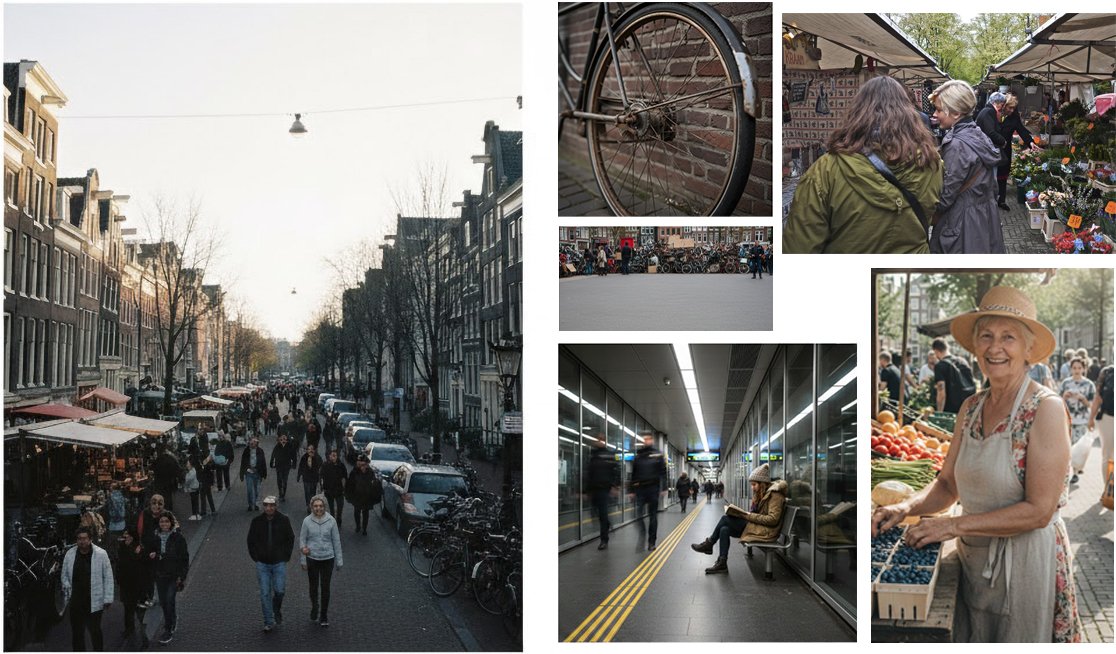
Initial Reactive Frame
Final Constructed Narrative
“I still feel overwhelmed by how busy Amsterdam is, but Jacob taught me to see the city as a series of pre-built stages and scenes, like a movie set. By establishing my 'anchor' first, everything was easier. I’m working on being an active narrator.”
—Sara K.
Your Questions,
Answered
Q: How does the Masterclass differ from the Field Clinic?
The Masterclass is an immersive, 6-hour deep dive designed for thorough creative growth. While our shorter clinics focus on the fundamental mechanics of composing a single frame, the Masterclass trains you to navigate multiple complex urban environments. We move past isolated snapshots to help you construct a cohesive, professional visual narrative across the entire city.
Q: Do I need to provide my own equipment for the Masterclass?
You are highly encouraged to use your own camera or sketching tools to ensure your creative breakthroughs translate directly to your daily practice. However, to eliminate any technical distractions and let you focus entirely on your technique, I provide full access to a premium field kit for both the Hybrid and Urban Sketching tracks.
This curated kit includes professional Rosemary & Co sable brushes, a custom palette of Schmincke Horadam pigments, and a luxury Etchr Lab or Hahnemühle cold-pressed watercolor sketchbook. This allows you to experience working with some of the world's finest traditional materials without any initial barriers to entry.
Q: What is included in the "Creative Roadmap"?
The Creative Roadmap is a personalized outline built around your specific interests and experience level. Prepared through a collaborative conversation before we ever meet in the field, this guide coordinates our day across multiple subject-rich neighborhoods. It accounts for dynamic elements like shifting daylight and urban crowds to ensure every single minute on the street provides meaningful, practical insight.
Q: Can I pursue both sketching and photography in one session?
Yes. The Hybrid Track is exclusive to the 6-hour Masterclass format, which provides the necessary time to naturally integrate both mediums. We explore a balanced workflow where you use the camera as a fast, instinctive tool to map out a scene's underlying architecture, and the sketchbook to capture rich, atmospheric layers of watercolor and ink.
Q: What advanced technical skills are covered?
We move well beyond basic exposure and camera settings to give you total creative control over your medium. Depending on your personal goals, we can master advanced manual light metering for high-contrast shadows, intentional motion blur (dragging the shutter), or the deliberate architecture of color to evoke a specific emotional mood within your story.
Q: Is "Reactive Photography" really that bad? Is it viable?
Not at all—but most people do it frantically rather than intentionally. Our approach doesn't abandon the split-second thrill of street photography; it gives you the baseline habits to capture it with absolute certainty.
When people criticize reactive photography, they are usually talking about the "spray and pray" method—shooting blindly and hoping a story accidentally appears on the memory card. Even masters like Henri Cartier-Bresson planned their shots. He would isolate a beautiful background "stage" first—a sweeping staircase or a dramatic shadow—and then wait calmly for a cyclist or pedestrian to cross his frame.
Think of it as acting like a director in a world you can’t control. This training makes you a far more instinctive, confident street photographer by focusing on four key habits:
Reading the Stage: Training your eye to recognize powerful composition and geometry within the urban chaos before the action starts.
Anticipating the Action: Learning to watch human patterns so you can position yourself strategically before a subject enters your frame.
Commanding the Depth: Learning to see the visual "stack"—instantly organizing your foreground, midground, and background into a clear story.
The Intentional Pause: Instilling the discipline to hold the shutter until a gesture or silhouette becomes genuinely meaningful, avoiding the trap of shooting too early.
Q: How does "The Final Review” function?
We conclude our 6-hour session by sitting down together for a supportive, professional look at the day's work against your original project goals. This review is specifically designed to isolate any recurring technical roadblocks or composition habits holding your vision back. You will leave the studio with a clear, reliable workflow you can bring directly to your next independent project.
Q: I am quite experienced; can we skip the basics?
Absolutely. Because every masterclass is a private, 1:1 mentorship, we don't follow a rigid, one-size-fits-all syllabus. We bypass the basic introductory steps entirely and use your existing expertise to elevate the depth and pace of our study, ensuring the technical challenges match your professional standing.
02. The Masterclass
Technical Specifications
Course Name: The Field Masterclass.
Course Content: High-intensity vocational training focused on the Synthesis of Narrative—bridging technical mastery with a refined personal signature through doctrine such as the 6-Step OODA Loop.
Level: Vocational / Advanced / Professional
Tuition: €695
Duration: 360 minutes (6 hours) of active field instruction.
Objectives: Optimization of creative hurdles and the attainment of high-level professional benchmarks in visual storytelling.
Target Group: Advanced practitioners, creative entrepreneurs, and those seeking Technical Sovereignty in the urban environment.
Entry Requirements: Demonstrated proficiency with a primary instrument (camera or sketching kit); no prior educational degree required.
Exemption Policy: No exemptions granted (EVC) due to the bespoke and immersive nature of the pedagogical unit.
Total Study Load: 6.5 Hours total: 30m strategic intake and 6h applied field study including summative evaluation.
Materials: Includes Advanced Creative Brief (Syllabus) and Evaluation Record. Sketching kits provided for Multi-Discipline and Sketching tracks. Photography students must supply their own cameras and gear.
Qualifications: Participants receive an Amsterdam Creatief Certificate of Completion.
Exams Results: This is a performance-based vocational study. Mastery is determined through real-time Summative Evaluation and final evaluative (formative) audit of work produced; there are no formal written examinations or resit options.