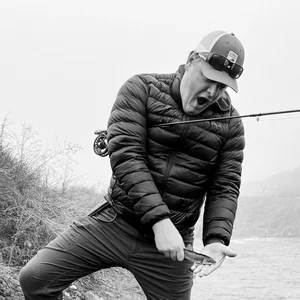
Bad Weather = Better Art.
Embracing the Challenge is Your Creative Breakthrough
You’ve arrived at a quintessential Amsterdam canal view, ready to capture the magic—but the weather seems anything but cooperative. The sky is a flat, uncompromising grey, a hard rain is falling, and a brisk wind whips through the streets.
Do you pack up your camera and sketchbook, waiting for the "perfect" sunny afternoon? Absolutely not! This is, after all, part of the story of your travels!
The idea that you need "perfect" weather to create great photos or art is a limiting belief that can stifle your creativity. I teach my students that the issue is not the light itself; it’s your perception. The truth is good art can be created in any light condition; fair weather and soft light just make the job easier. Rather than hide in your hotel, embrace the challenging light and weather and turn it into a central element of your story.
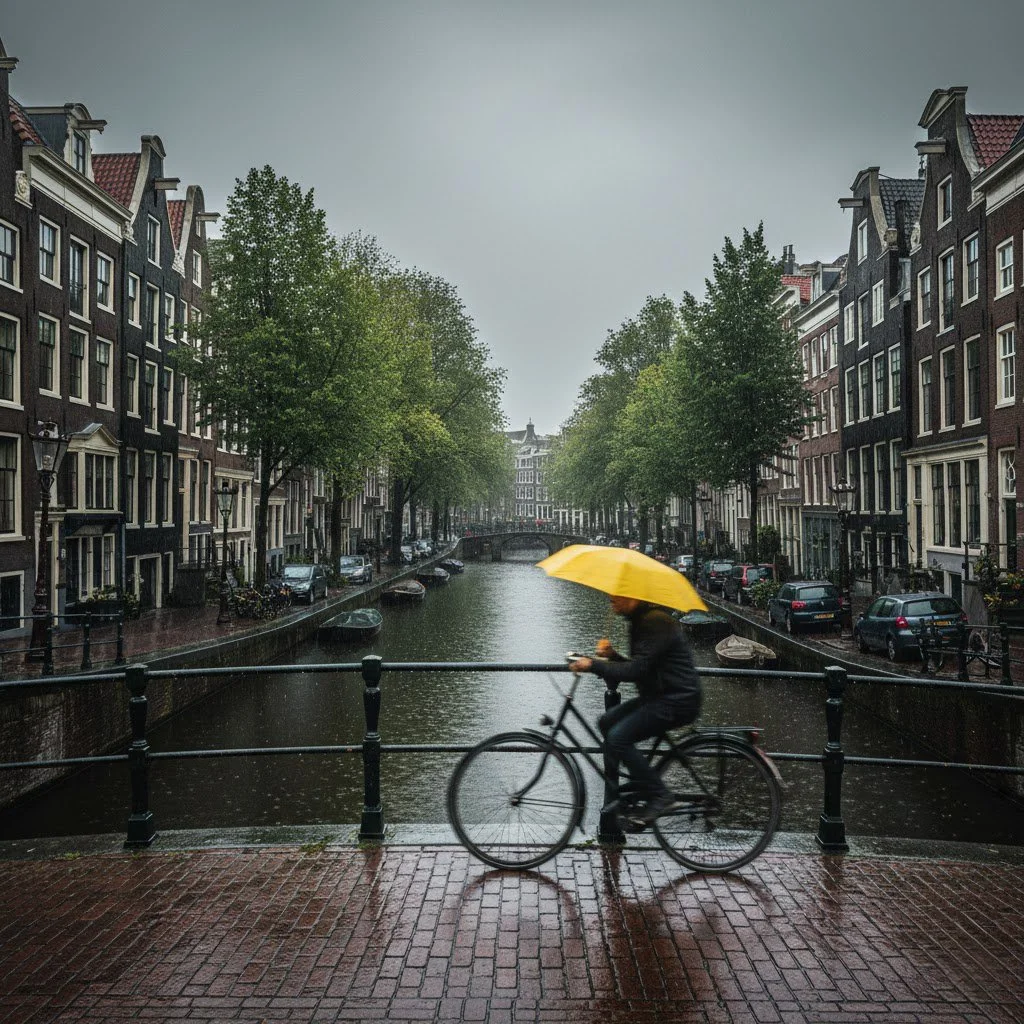
As the Dutch say, you’re not made of sugar—you won’t melt!
When the Light Is Soft and Flat (Overcast, Foggy, Rainy)
Flat light—common in Amsterdam—minimizes distracting shadows, providing a completely different set of powerful tools for both photography and urban sketching. Instead of complaining about the lack of shadows, I show my students how to pivot their focus, applying The Art of Reduction to the scene.
• Shape & Structure: Look for strong architectural lines and interesting forms against simple backgrounds. Soft light minimizes shadow distraction, causing the pure form of gables and bridges to stand out prominently, making them perfect subjects for focused urban sketching and line drawing.
• Color as Focus: Make the contrasting colors of rain-slicked bricks, canal boats, or storefronts your primary composition tool. Without dramatic light, color contrast or color harmonies become the most energetic elements in your frame, forcing your eye to see essential color relationships.
• Mood: Embrace the atmosphere of the day. Flat light can a melancholic, quiet, or contemplative mood, especially with fog. Embrace this feeling—in your photo exposure or your watercolor wash—to define the emotion of your image.
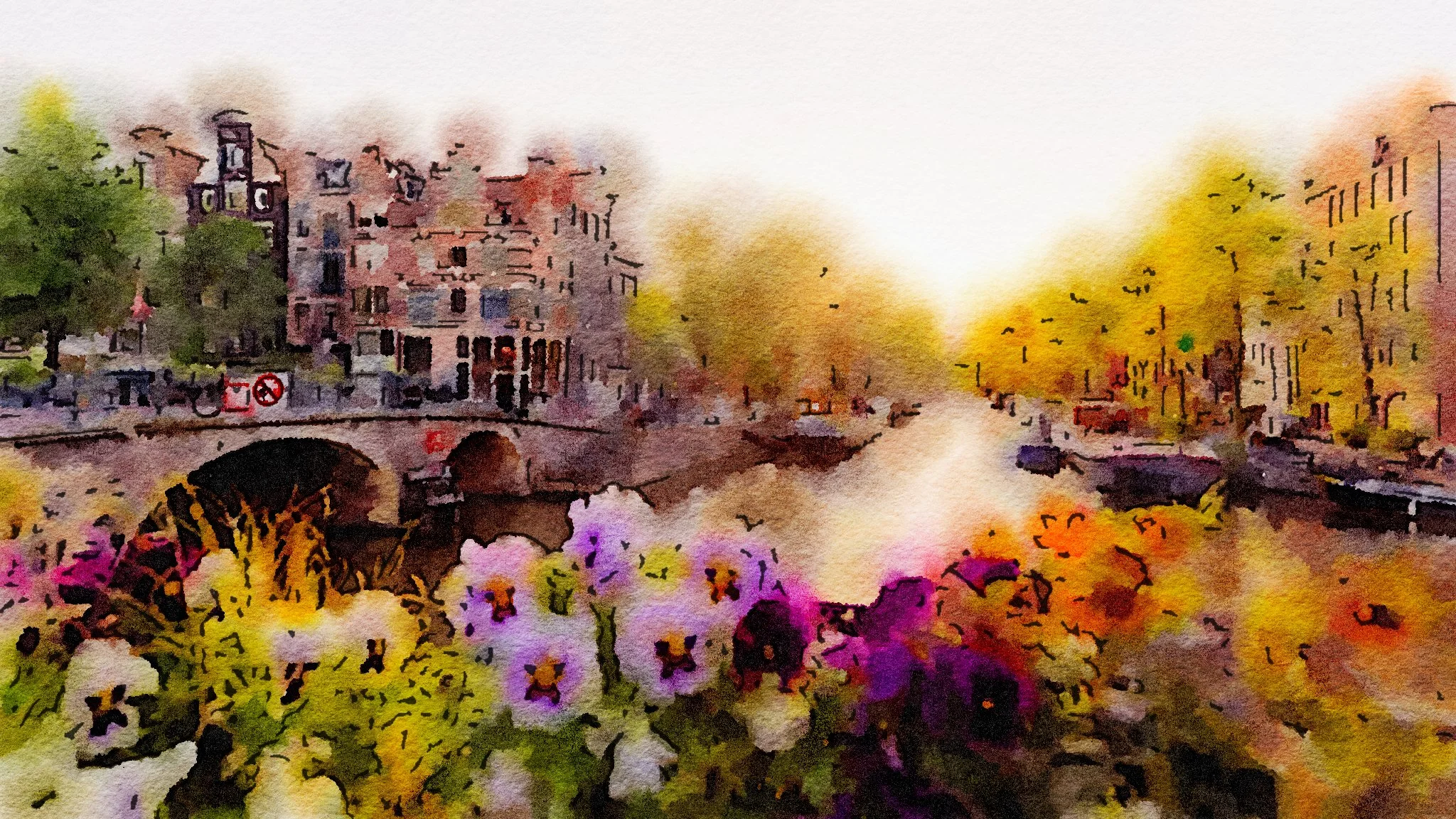
Rain blurring and blending your paint? Lean into it and use your pens to highlight detail.
• Action & Movement: Introduce energy using dynamic movement. Use a slower shutter speed to blur running people or a cyclist speeding by, adding interest to an otherwise flat scene.
Internalize this Mindset: I lead weather-proof tours utilizing charming cafes, museums, or covered markets for indoor instruction. I don't just point out sights; I actively teach you how to see these moments and light conditions differently, guaranteeing personalized instruction in a class no larger than 4 guests. (See my Photo Tours and Sketching Tours for availability.)
When the Light Is Hard (Midday Sun, Strong Shadows)
Hard light creates high contrast and defined shadows. Applying the intentionality of The Focus-First Method means you use the shadows themselves as powerful compositional elements.
• Light & Shadow Play: Use the strong, defined shadows as graphic, compositional elements. Harsh light creates sharp angles and compelling geometric shapes that you can incorporate into the frame—search for these graphic opportunities.
• Contrast: Focus on the harsh transition between the brightly illuminated areas and the deep, dark shadows. This extreme difference in exposure creates instant drama and an intense mood.
• Reflections: Look for strong reflections on glass, water, or shiny surfaces. Hard light creates powerful reflections you can use to add layers and dynamic energy to your photo or sketch.
Your New Creative Mindset: The Empowered Hero
Next time the light is "bad"—flat, harsh, or rainy—don't put your tools away. Pick one technique from above and go out and practice for 30 minutes.
Instead of saying, "I cannot shoot in flat light," ask yourself, "How can I, the creator, shoot in flat light?"
Never put a creative block on yourself. Your artistic freedom depends on your ability to find a solution to any challenge. Stop buying the memory. Start making it.
Better yet, book a skill-focused tour with Amsterdam Creatief today to transform passive sightseeing into an active, creative, and memorable cultural experience. By facing the challenge, you create a rich, Tangible Memory of your journey. For a truly custom, deep-dive session on mastering light in any condition, explore my Bespoke Private Curriculum.