The Art of Reduction: Combatting Choice Paralysis
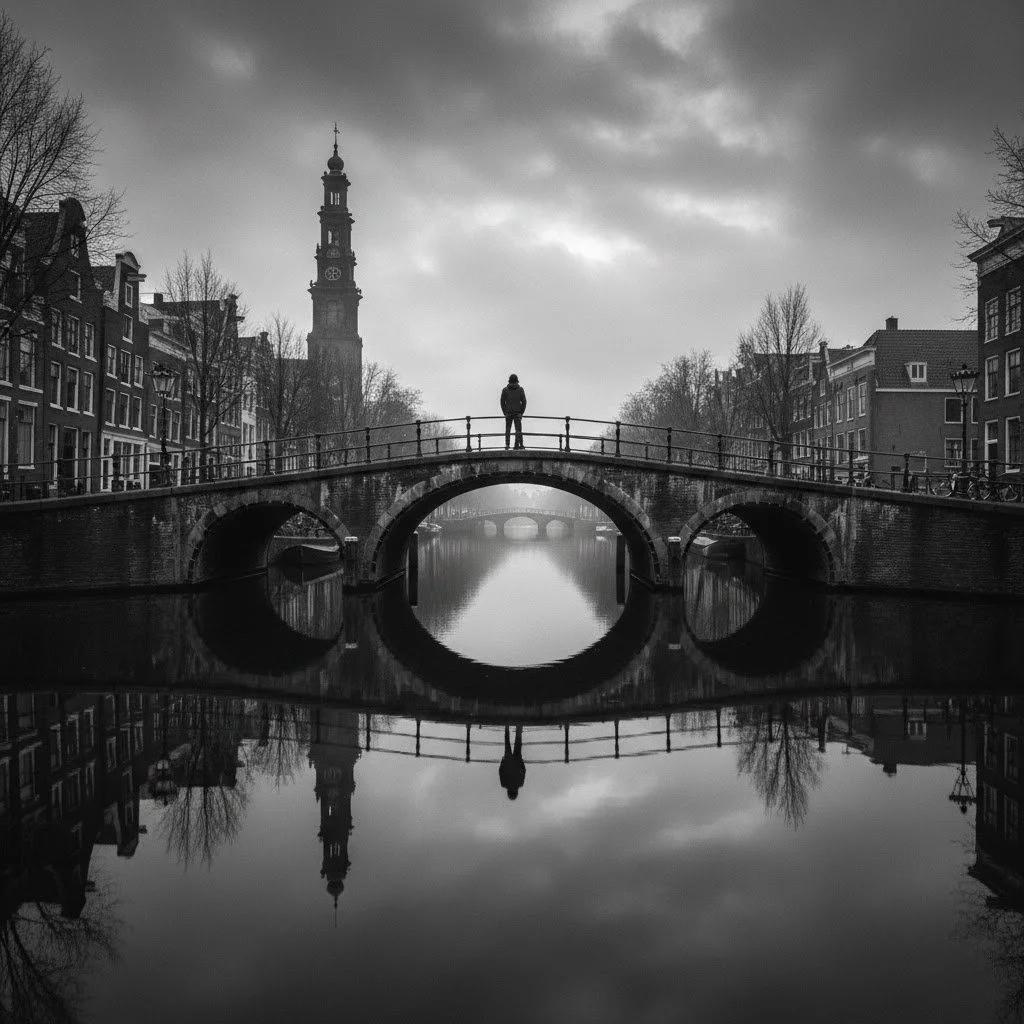
You can buy the best camera in the world, but if your eye hasn't been trained to see, you will still capture the blurry, generic photo.
In our travels, we treat time as a checklist. We rush from landmark to landmark, accumulating photos but failing to genuinely connect with the space around us. If you feel overwhelmed or return home with flat, uninspired work, you’ve hit the ceiling of passive creation.
The solution isn't new gear; it's a complete shift in how you see. My method, which I call the Focus-First Method, is built on Essentialism—the mandate to see less and experience more by experiencing deeply. Quality over quantity, it is the roadmap for turning visual chaos into focused, authentic art.
Phase 1: The Necessary Pause (The Sketching Gap)
The most important tool you have is your eye, and just like a muscle, it needs intentional training. We start by conquering the Paralysis of Choice and reducing mental clutter.
Initiate the Pause: Commit to a 15 to 30-second Necessary Pause. Resist the instinct to immediately snap the photo. During this time, you are not looking; you are Identifying. Ask yourself this single, critical question: What is this scene truly about?
The Memory Test: A photo takes a fraction of a second, resulting in shallow memory encoding. When you commit to a longer process—like a 15-minute sketch—your brain must actively process light, shape, and structure over time. The Sketching Gap trades speed for soul, creating a memory that is deeper, richer, and more detailed.
Choose Your Mode: The Pause determines your approach. Photography is Subtractive (you remove clutter). Sketching is Additive (you only add the essentials). This simple decision sets the stage for the compositional work ahead.
Phase 2: The Art of Reduction (The 3-Step Clarity System)
Once your mind is settled, we apply The Art of Reduction—the strategic, three-step method for achieving structural honesty in your composition.
1. Spatial Reduction (The Crop)
We decide what is essential to the message and what is extraneous.
The Rule: If an element—a pipe, a sign, a parked scooter—does not actively serve the message, it must be removed.
The Action: Change your angle, crop in tight, or use compositional tools like [Sub-Framing] to physically exclude static clutter. For sketchers, this is the simple power of omission—leaving it off the page entirely.
2. Line and Form Reduction (The Blueprint)
We simplify complex reality down to its core structure.
The Rule: Focus only on the elements of light, shape, and shadow.
The Action: Use strong angles and geometry to distill the complexity down to a simple, visual path. If sketching, draw the defining lines that capture the building's essence—the viewer doesn't need to see every bit of mortar.
3. Tonal Reduction (The Spotlight)
This is the final stage where you use light and color to direct the viewer’s eye.
The Rule: Create a clear, defined hierarchy of visual importance.
The Action: Use light and shadow to put the Spotlight on your subject. You can push distracting elements into shadow in editing, or in sketching, use color intentionally and sparingly—never to copy reality, but to spotlight the core subject.
Phase 3: Mastering the Moment (Practice & Timing)
Theory means nothing without practice. The final commitment is achieved by training your eye to anticipate the light and the action.
Anticipation & Narrative: Stop chasing the moment. Spend time just observing street life—you must learn to anticipate the subtle gesture or interaction. This allows the moment to come to you, rather than forcing the narrative.
Compositional Drills: Challenge yourself with structured exercises. Commit to one focal length to force creative framing, or spend an entire session finding nothing but leading lines or frames-within-frames.
The Intuition of Light: Light is fleeting. I don't wait for "perfect," but I wait for a moment when the light tells my story. Practice by watching the light change during Golden Hour or observing where the light and shadow interfaces occur on architecture.
The Ethics of Timing: This is where my photojournalism ethics come in. The photograph captures a slice of time, and that slice must be honest. Wait until the moment is true to the overall scene or person, avoiding the distortion of the "mid-sneeze" moment.
Speaking the Language of Color: To train your eye for color, choose one color—like "Amsterdam Brick Red"—and spend an entire session searching for its contrast and harmony on the street.
The process of training your eye never truly ends, but every step you take to see the world differently is a step toward making better, more authentic memories.
The Result: Your Tangible Memory
The finished sketch or photograph, achieved through the Focus-First Method, is not a fleeting snapshot. It is an authentic, tangible, memory. By stripping away the unnecessary, you reveal your own unique perspective, transforming a snapshot into art worth sharing.
Ready to move from theory to true vision? Book your private mentorship and let's put the Focus-First Method into practice on the streets of Amsterdam.