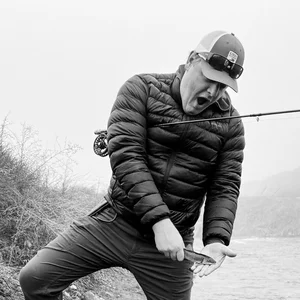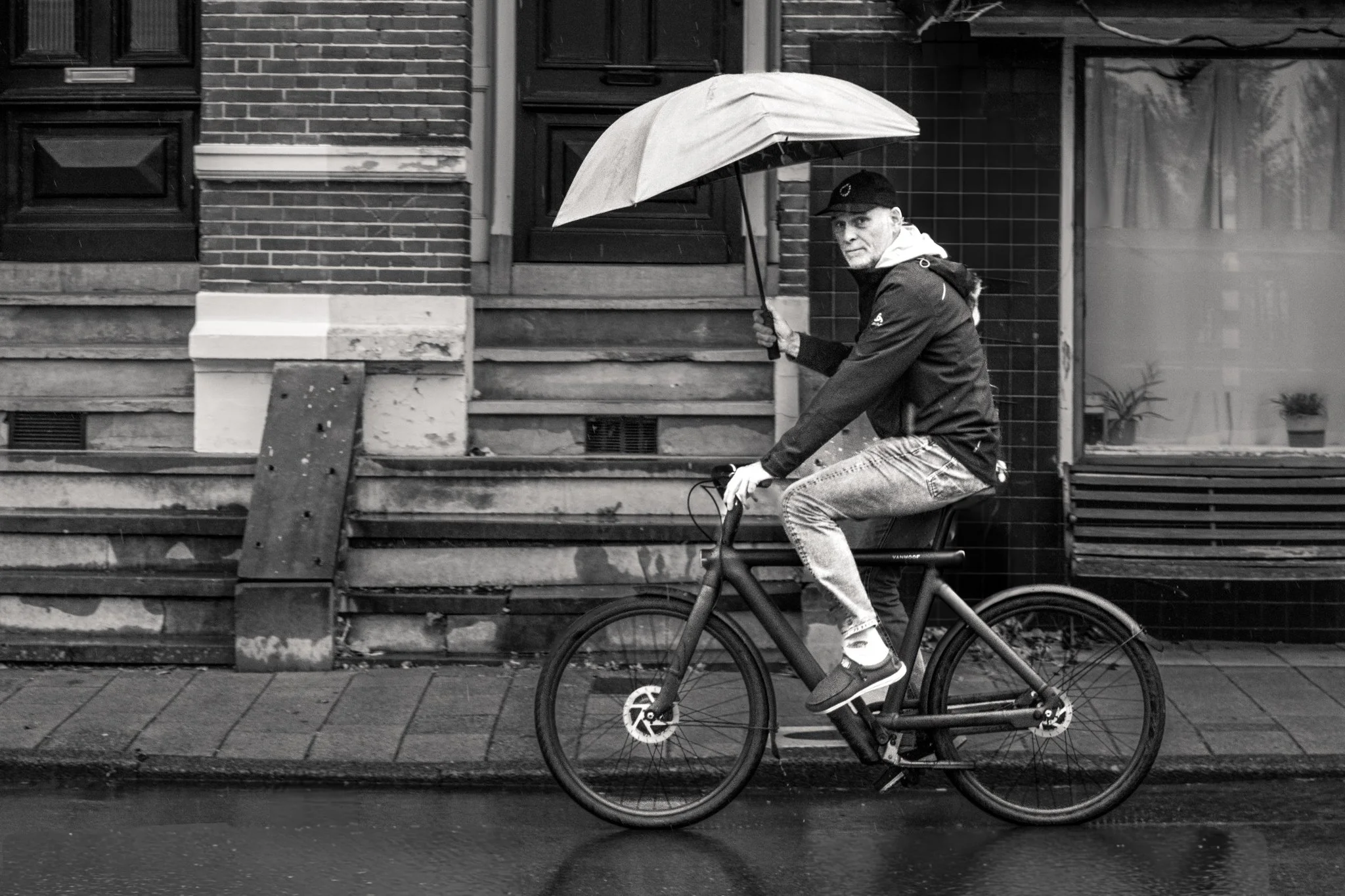
If you feel self-conscious raising a camera on a busy street, you are in good company. Almost everyone feels that way when they start. You stand at the edge of a scene, wondering how strangers will react and worrying you’re intruding.
When I first started taking pictures of people in public, I felt that exact same hesitation. I kept my distance and hoped nobody would look my way. I tried to act like I wasn’t there, to hide, to blend in.
Which is funny, because I am 201cm (6’7”+) tall. Even living in the Netherlands, the tallest country in the world, I have never blended into a crowd. I am incapable of being invisible anywhere I go. Yet I have worked successfully as a documentary photographer for decades because I eventually realized that even though I will always be seen, I don't have to stand out.
In fact, trying to be sneaky usually backfires. When you creep around trying to hide your camera or self you look furtive, make people nervous, and ironically end up drawing more attention to you.
When I was in junior high I got a drip of mustard on my white t-shirt. I “knew” everyone was looking at it, dead center on my chest. Later that day a friend I had had every class with asked what I was doing to my shirt. “Hiding the mustard” I said. “You have mustard on your shirt?” he asked, surprised. “That sucks, but at least you have both socks.” While I was sure everyone was noticing my mustard stain, I hadn’t noticed that my best friend had only worn one sock that day. Turns out, most everyone is so wrapped up in their own lives they aren’t as focused on what you are doing as you might think.
Once I stopped trying to disappear, everything got easier. Today, I love getting close. My favorite lens is a 28mm which requires me to get right into the scene I’m photographing. So, I walk slowly, take in the neighborhood, and let my curiosity lead me around. Sometimes I smile or crack a joke before I even lift the camera. Other times, I might smile and partially lift the camera while making eye contact. Usually they’ll nod or indicate that a photo is fine. If they don’t, it’s not a problem, and if the photo I’m going for requires them to not pose or break the candid moment, I’ll set my camera up for the photo ahead of time, calmly capture the frame, and move on before my presence registers.
People pick up on your energy immediately. When you are relaxed and open, they relax too.
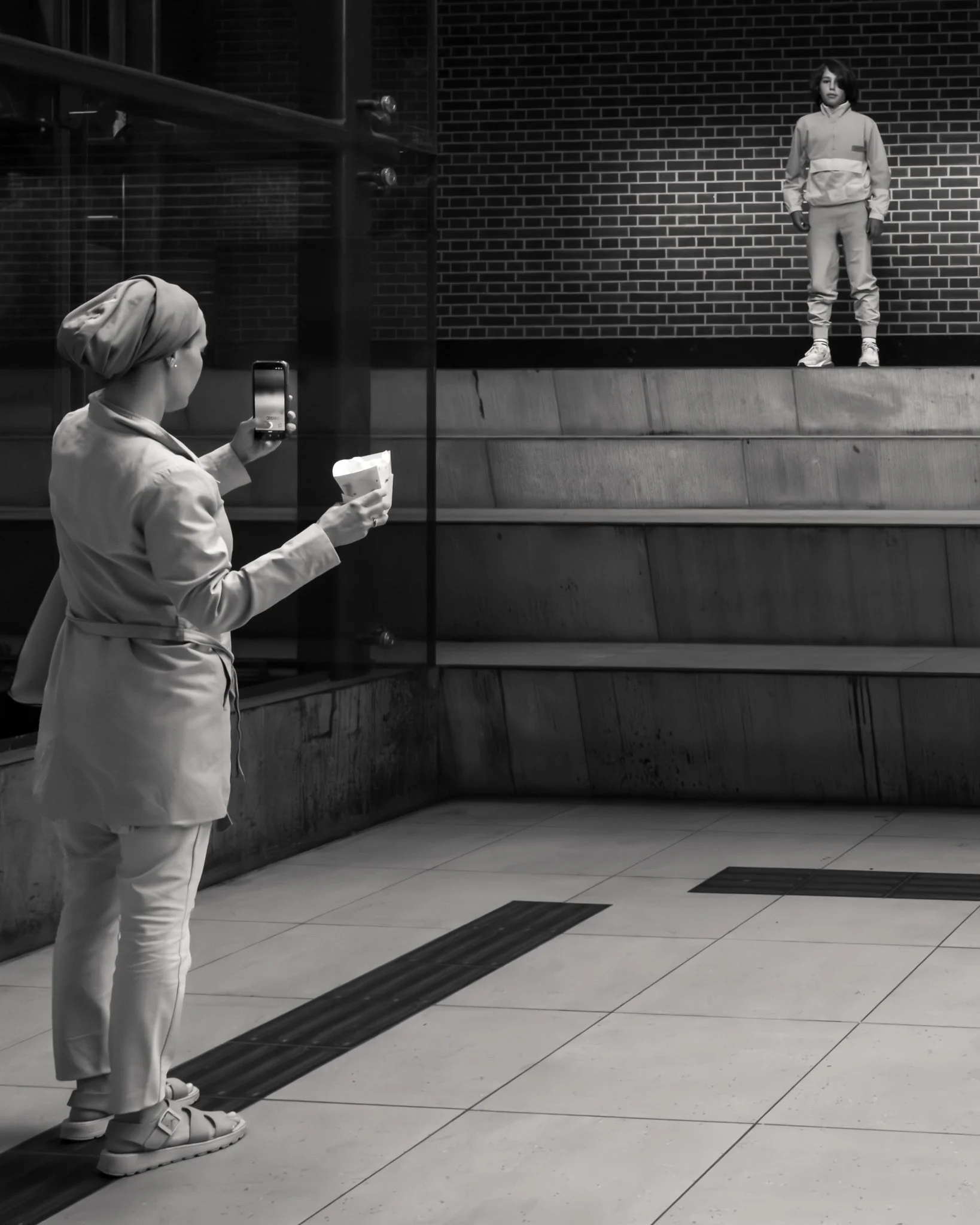
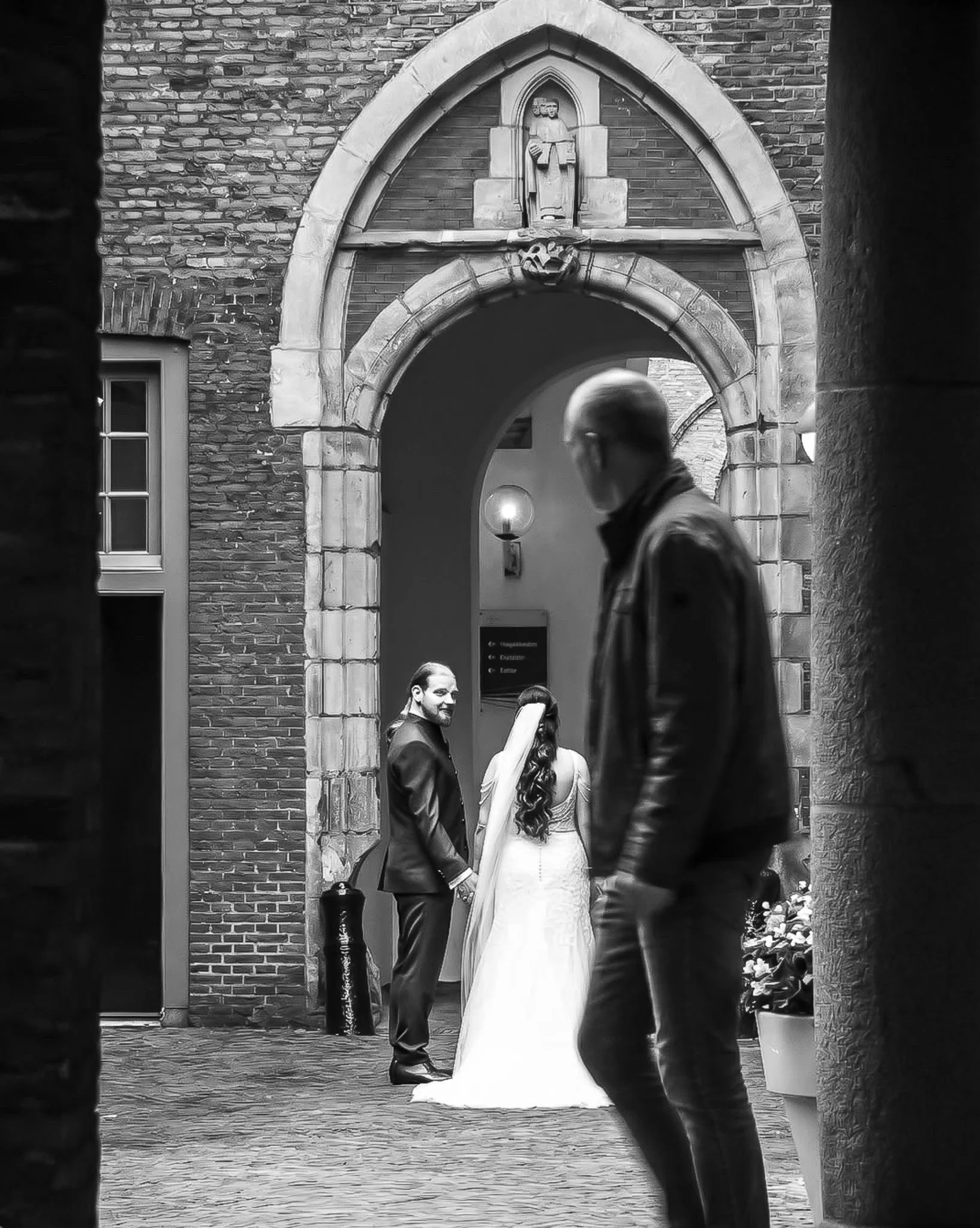
Sometimes being noticed can make the shot. This is more interesting because the child is looking directly into my camera and not the one he’s supposed to be looking at.
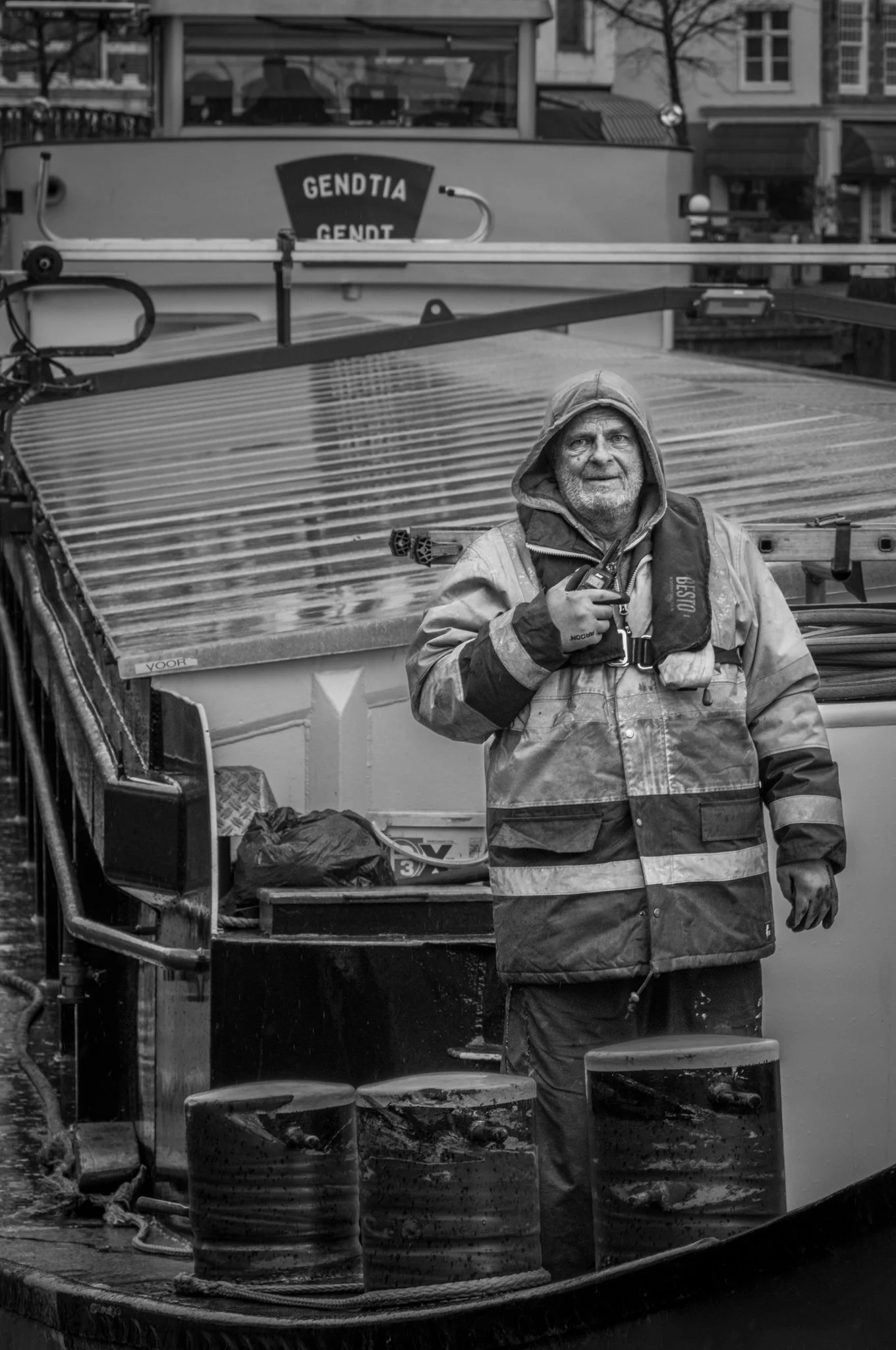
Recently in Haarlem I was walking the Spaarne and I saw a man peering over the bow of a very long canal barge, ensuring the 70m vessel wouldn’t get stuck in the bend of the 50m wide river. I took this shot. Not great, but it sets the scene.
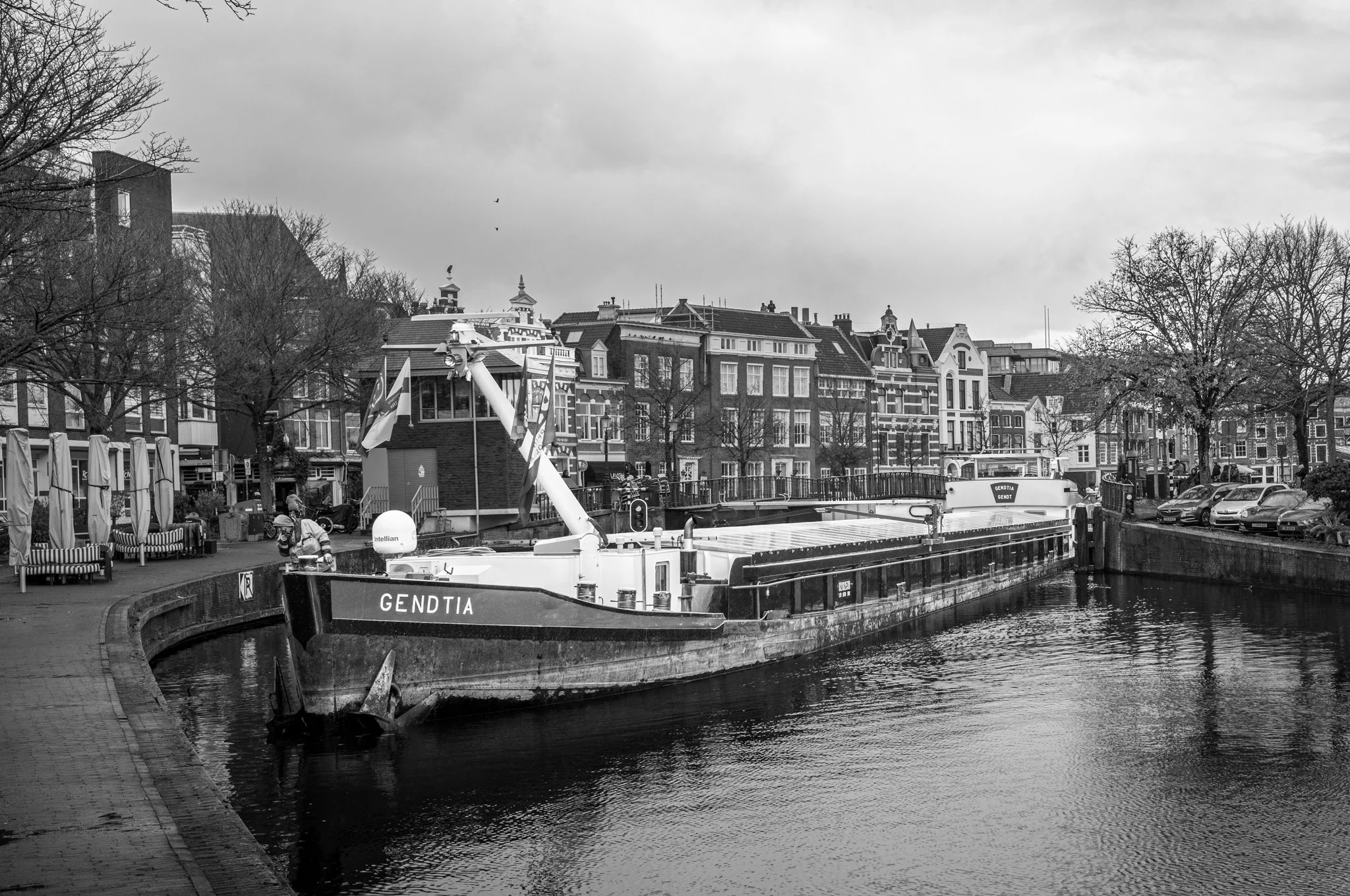
Then he noticed me, radioed the captain “Daar staat een fotograaf, laten we hem niet aanrijden" (There is a photographer, let’s not hit him), and went back to work. It made me laugh, which he heard, we made eye contact, both smiled about his joke, and as he went back to work I captured this. In my opinion, a much better photo.
Presence Changes Your Pictures
Being noticed isn't a disaster. Often, it's what makes a photograph interesting.
When you carry yourself calmly, you buy yourself time. You can linger on a corner, wait for a gesture or an expression,and let a scene play out without rushing off the second someone makes eye contact. Often, they’ll see you and if you aren’t being obnoxious their eyes and attention will move on to something else and you’re back in business.
Street photography is really just about people and the spaces they inhabit. The strangers walking past you are the whole reason the photograph exists.
How to Work Openly
Keep your gear simple and set your exposure before you start walking, so your head stays up and your attention stays on the street. Move at an easy pace and keep your body language unhurried.
Before you press the shutter, think about fairness. Ask yourself if the photo treats the person with dignity, and if you would feel fine explaining why you took it. Good judgment comes with practice, and it starts with treating people like human beings.
If someone does notice you and asks what you’re doing, welcome the conversation. A friendly, brief explanation about photographing everyday life goes a long way. A polite chat always beats trying to slip away.
Walk With Me in Amsterdam
Next time you are out walking and feel the urge to tuck your camera away, pause for a second. Look around, take your time, and meet the street with the same openness you hope to find there.
Getting past that initial hesitation is much easier when you practice alongside someone who has been through it. That is why I run small street photography workshops through Amsterdam Creatief. We spend our time walking the streets and canals of Amsterdam together, working on how to read a scene and feel comfortable around people so you can make honest photographs.
If you want to stop hovering on the sidelines and enjoy the walk, come join me for a workshop.