Manual Mode + Auto ISO
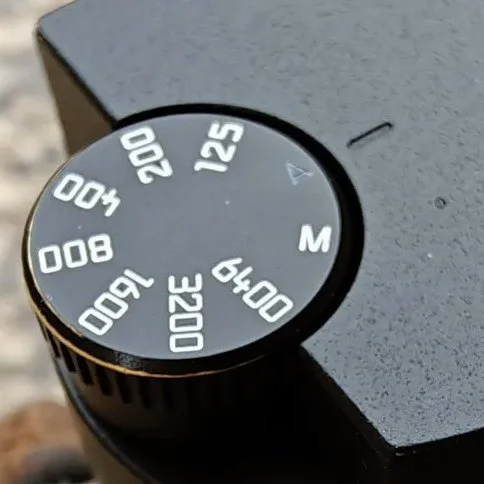
Much as I like my camera’s tactile knobs, this is one I ignore.
Why You Can Stop Worrying About the Exposure Triangle
We’ve all had the "Exposure Triangle" drilled into our heads since day one. It was a solid map back in the film days, but in the streets of 2026, it’s a clunky way to work.
Two variables actually shape your story: Aperture (the depth of the stage) and Shutter Speed (the rhythm of the motion). ISO? That’s mostly just the math required to make those choices visible.
ISO Isn’t a Creative Choice
Let’s be direct: ISO isn’t “exposure” in the old sense—it’s gain, like turning up the volume on a quiet radio signal.
Your creative decisions—the "Bones" of the frame—come from aperture and shutter speed. I’ve never met a photographer who chose ISO 3200 for its "aesthetic soul"; they chose it because the sun went down. By treating ISO as a background utility rather than a creative pillar, you free up your brain to focus on the narrative.
The Protocol: Manual + Auto ISO + Exposure Compensation
Amsterdam’s light is a moving target. You’re in a dark stone archway one second, and under the high-contrast glare of a bridge the next. Here is the workflow I use to keep my creative intent locked while the world shifts around me:
Lock your Aperture: Decide how much of the scene needs to be in focus to tell the story.
Lock your Shutter Speed: Decide how the motion should look—a crisp "Human Anchor" or a deliberate blur.
Let Auto ISO handle the math: The camera’s computer is faster at calculating gain than you are.
The Sovereign Thumb: Use the Exposure Compensation (EC) dial. If the meter is fooled by a bright sky or a dark coat, you tweak it instantly to match your vision.
Why not Aperture Priority? In 'A' mode, the camera is a shutter-speed gambler. It might drag your shutter too low in a shadow, blurring a face you wanted sharp, or freeze a tram you wanted to show in motion.
Why not Shutter Priority? In 'S' mode, the camera is a depth-of-field anarchist. It might pop your lens to f/1.4when you needed the structural detail of the architecture at f/8.
Maintaining Narrative Consistency
The real benefit of this protocol is Visual Cohesion. When you lock your depth and motion while letting the ISO float, your series of images stays visually steady. The "feel" of the street doesn't change just because you stepped into a shadow.
You make the creative choices; the camera just handles the numbers. You stay in the driver’s seat. The camera is just the flight engineer, managing the fuel mix while you fly the plane.