The Hippie & The Journalist
My reactions and insights from reading Rick Steves’ On the Hippie Trail.
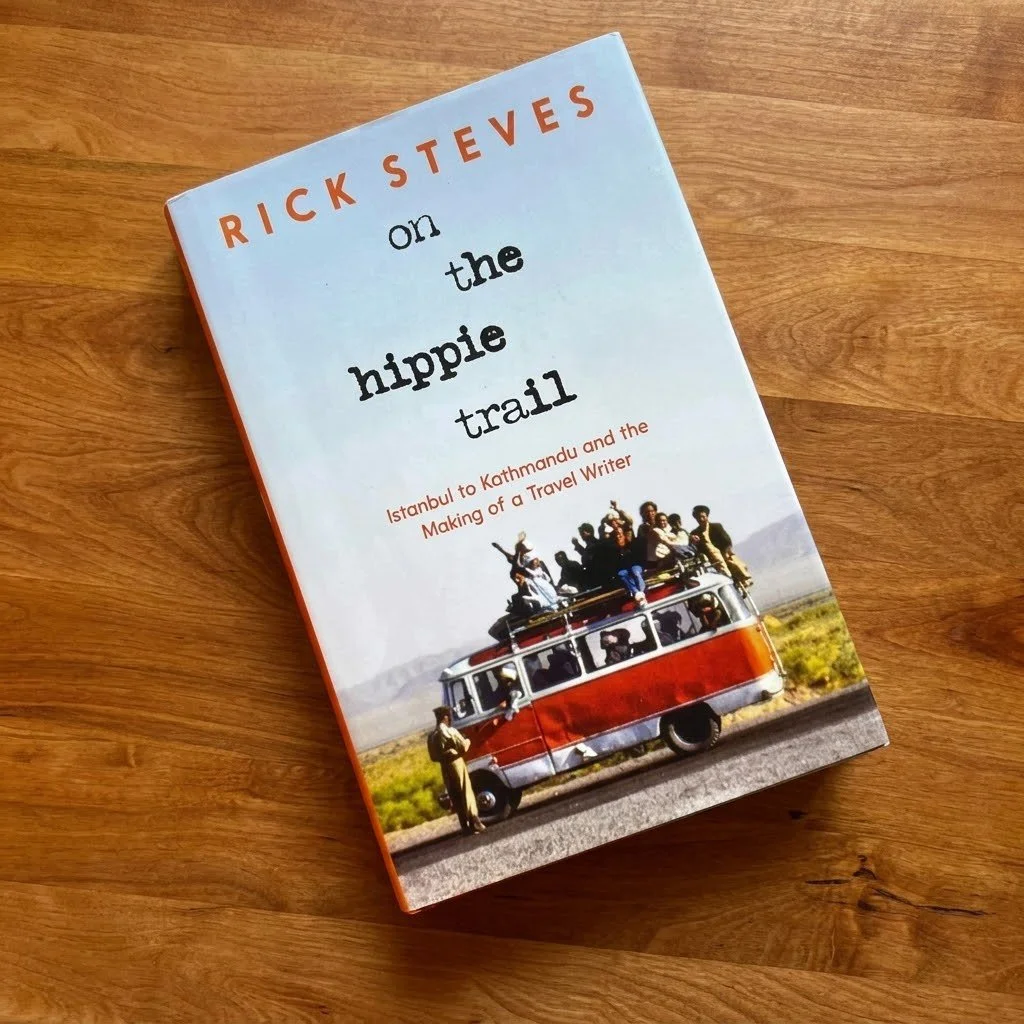
A fascinating book I can’t recommend enough.
Survival as a Diagnostic Tool
On the Hippie Trail, Rick Steves had no digital proxy. No GPS, no TripAdvisor. To move from Istanbul to Tehran to Kabul, he had to orient himself to the chaos. He had to read the "bones" of a city—the tilt of a minaret, the flow of a bazaar, the distance to the next water source—just to find a bus or a bed.
This is the foundation of what I call "The Architecture of Seeing." In the field, vulnerability is a diagnostic tool. When you strip away the "technical noise" of modern gear—the autofocus, the histograms, the safety nets—you are forced into a state of heightened perception. You stop being a spectator and start being a resident.
“The traveler sees what he sees. The tourist sees what he has come to see.” – Rick Steves
Refining the Protocol: From Structure to Atmosphere
My work often focuses on the architecture of the frame—the "Bones" to help capture the sense of “being there.” But Steves reminded me that the most powerful records are the ones that smell like the place they were written. Here is how I’m evolving my own practice:
Sensory Metadata: I’m adding a "Sensory Log" to my sketchbook margins. I won’t just draw the Dutch archway; I’ll record the temperature of the wind off the Amstel (8°C), the metallic "clack" of a heavy bike lock, and the low-frequency vibration of the 4-tram on the cobbles. In my photographs, I’m leaning into tonal mapping and micro-contrast to convey the dampness of the stone, moving away from "clean" digital perfection toward a more tactile, silver-rich aesthetic.
The Human Anchor: I’m moving past the "Stage" and into the "Intimate." I'm looking for the small details that prove a life was lived within the geometry—the brassed handle of a canal-side door, the ink stain on a vendor's hand, the way a wet wool coat catches the light.
The Everyman Bridge: My frameworks must continue to be a bridge, not a barrier. The goal isn't to demonstrate technical mastery; it’s to provide the tools for visual authorship. Like Steves, the aim is to give the practitioner the keys to the city, then get out of the way.
The Finality of the Roll
Rick Steves’ journey through 1970s Afghanistan and Iran was defined by scarcity—of money, of time, and of film. That scarcity created Intent. You didn't "spray and pray" when you only had three rolls of Kodachrome left and a thousand miles to Kabul.
As I prepare for a return to Amsterdam this autumn, I am carrying that "Hippie Trail" spirit into the digital age. We will treat each M11M frame and each page of the Moleskine with the same reverence Steves treated his last roll of film. Every click is an expense of spirit. Every line is a sovereign decision.
Because the Architecture of Seeing isn't about the camera or the brush. It’s about the soul of the artist.