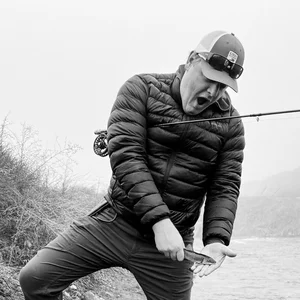
There is an easy trap when walking through Amsterdam with a camera: staying on the far side of the canal, putting on a longer lens, and isolating fragments from a safe distance. It’s appealing, it makes it easier to capture moments without getting close to them, it feels more comfortable. But to capture the character of this city, you have to get closer.
You need a 28mm.
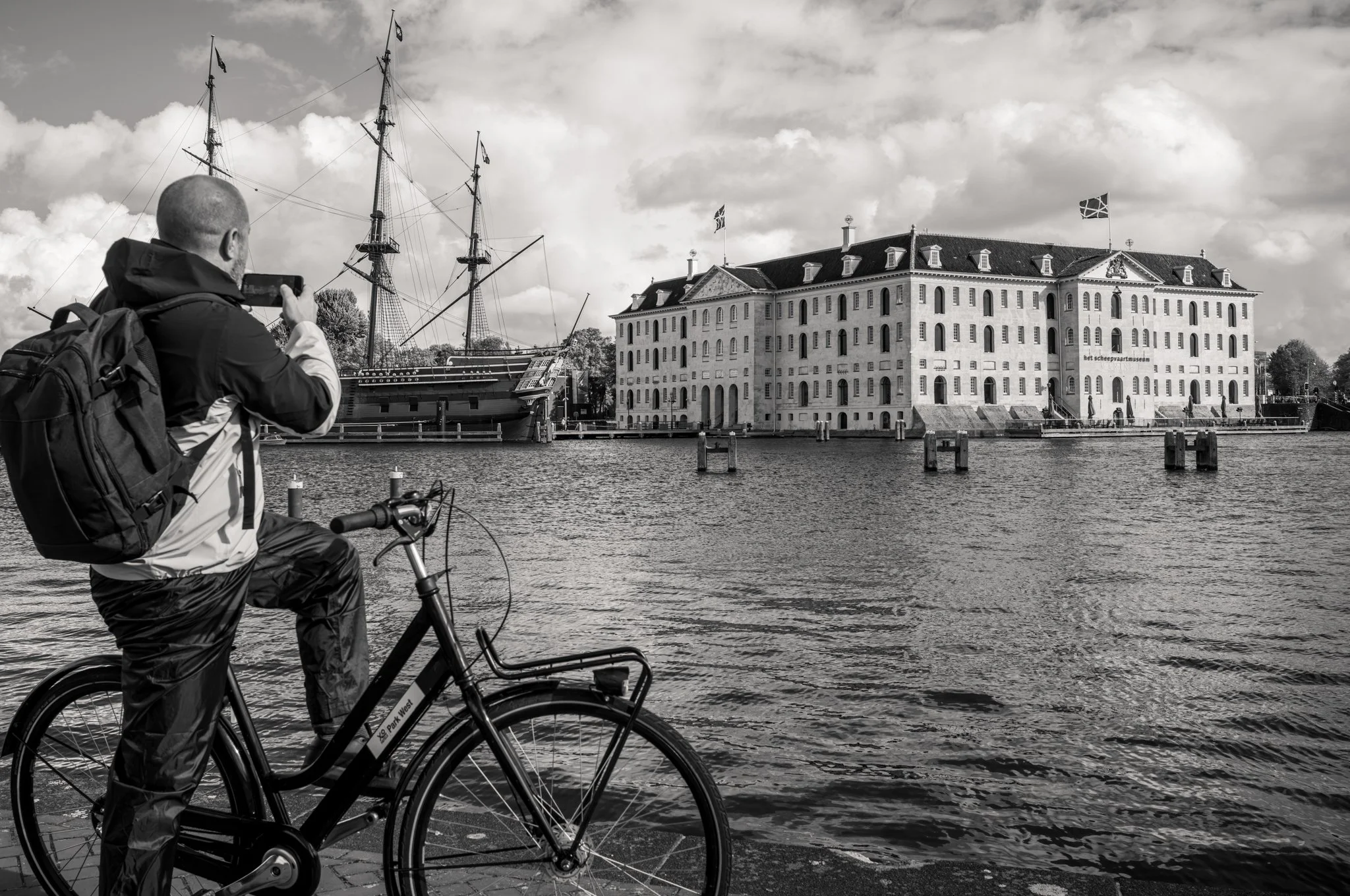
A 28mm does not compress the world or flatter through artificial blur. It insists on physical scale.
The Geometry of the Canal Belt
In wide, empty landscapes, a 28mm can easily leave your subject looking small and lost in the center. But inside the tight architecture of Amsterdam, in the press of people, it’s perfect for pulling your audience into the scene. It gives the right amount of context without distracting from your subject, but without distorting their features.

The Dutch Masters agreed. Long before cameras existed, Johannes Vermeer didn’t isolate his subjects by blurring the background into oblivion but by stepping close and putting us into the room with the girl and her pearl earring. In paintings like Het Melkmeisje (The Milkmaid), the texture of the plaster wall, the leaded glass of the window, and the light cutting across the floor tiles establish the whole story. The room gives the person their context. Composing tight tight would have stripped the painting of its context and story.
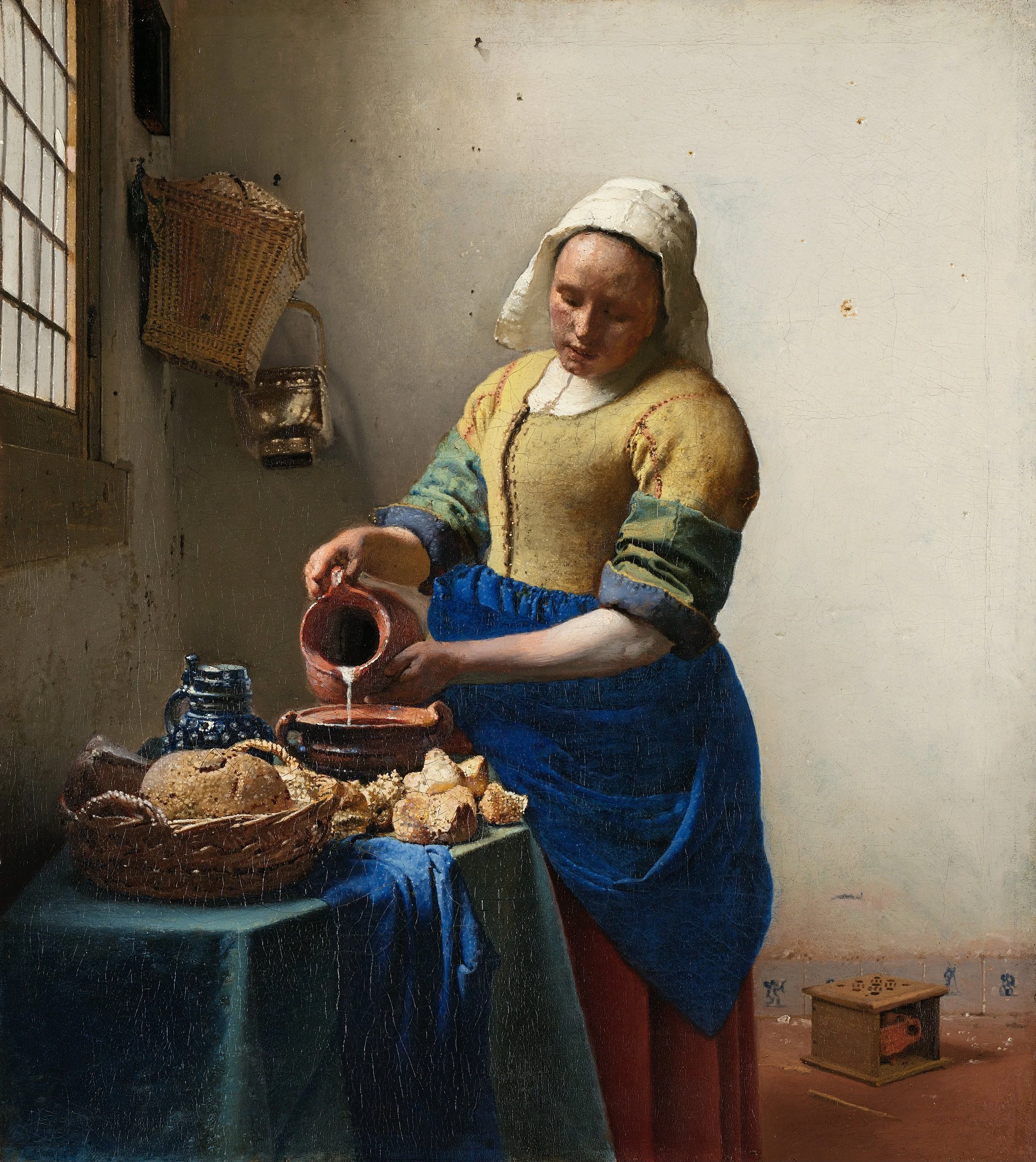
Vermeer’s Het Melkmeisje (The Milkmaid) relies on context. Most of the painting is not the milkmaid.
A 28mm demands the same discipline. You can't shoot wide open at f/1.4, obliterate the background with bokeh, and call it a day. It forces you to compose like an architect: squaring up the plumb vertical lines of leaning canal houses, working with the clean curve of a stone bridge, and organizing the geometry of the street so the city’s scenery becomes an intentional stage.
Bringing Order to the Frame
If Vermeer represents the architectural order of the 28mm, Rembrandt represents its kinetic soul. In The Night Watch,Rembrandt famously broke with tradition by refusing to line his subjects up in a flat, polite row. Instead, he pushed figures forward into the foreground and deep into shadow, using light to pull a dynamic scene together.

Before it was cropped in 1715 to fit a different display space, this image would have been very close to a 2:3 shot on a 28mm.
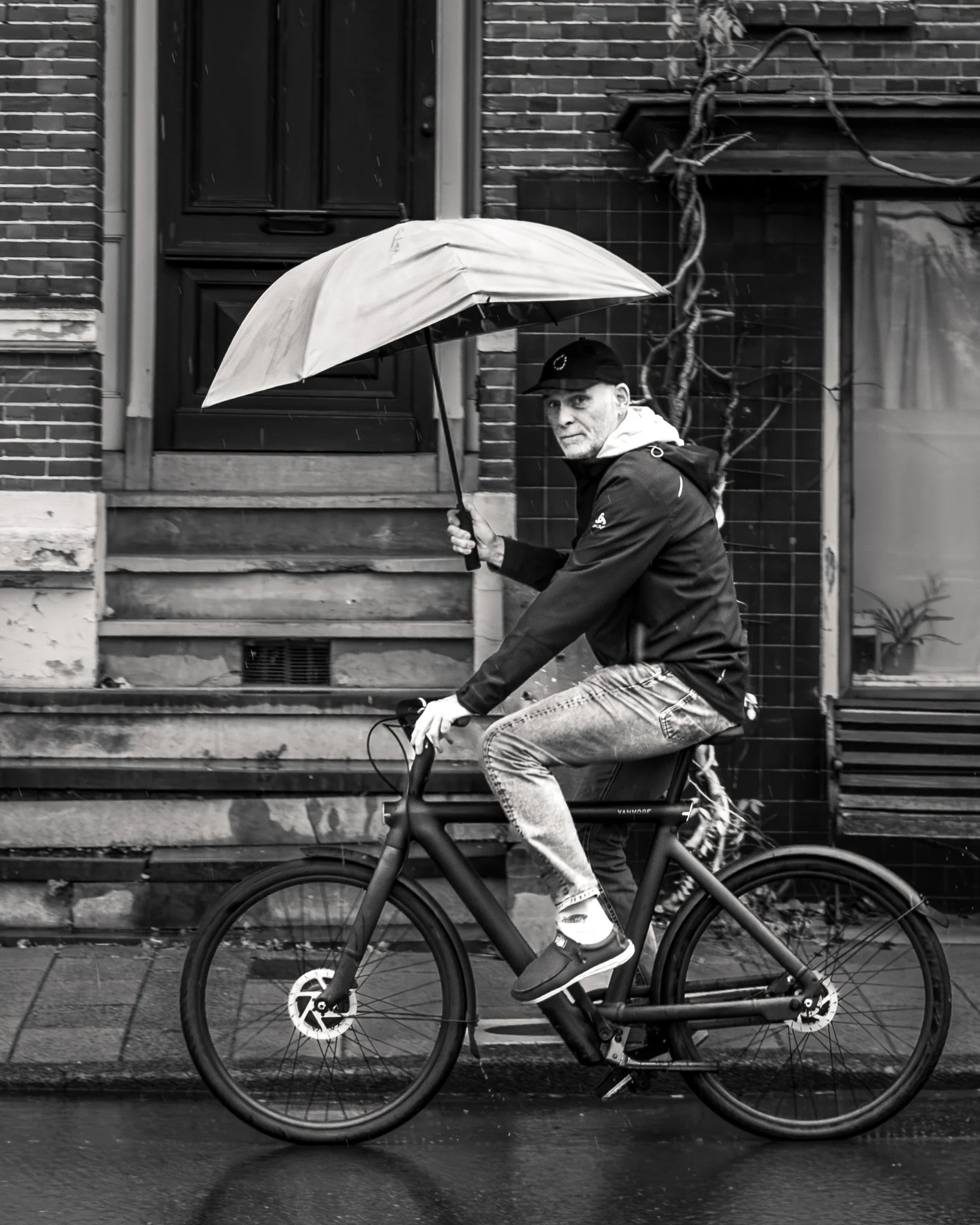
This is where the 28mm does its best work. Photographers often talk about using the focal length to bring order to chaos.Amsterdam has plenty of chaos: cyclists clipping across cobblestones, canal boats cutting through reflections, and pedestrians ducking through narrow alleys.
A long lens flattens all that movement into a single layer. A 28mm separates it. By getting down to street level, working your angles, and setting up a bold foreground element, you create real depth—giving the eye a path to travel through the frame.
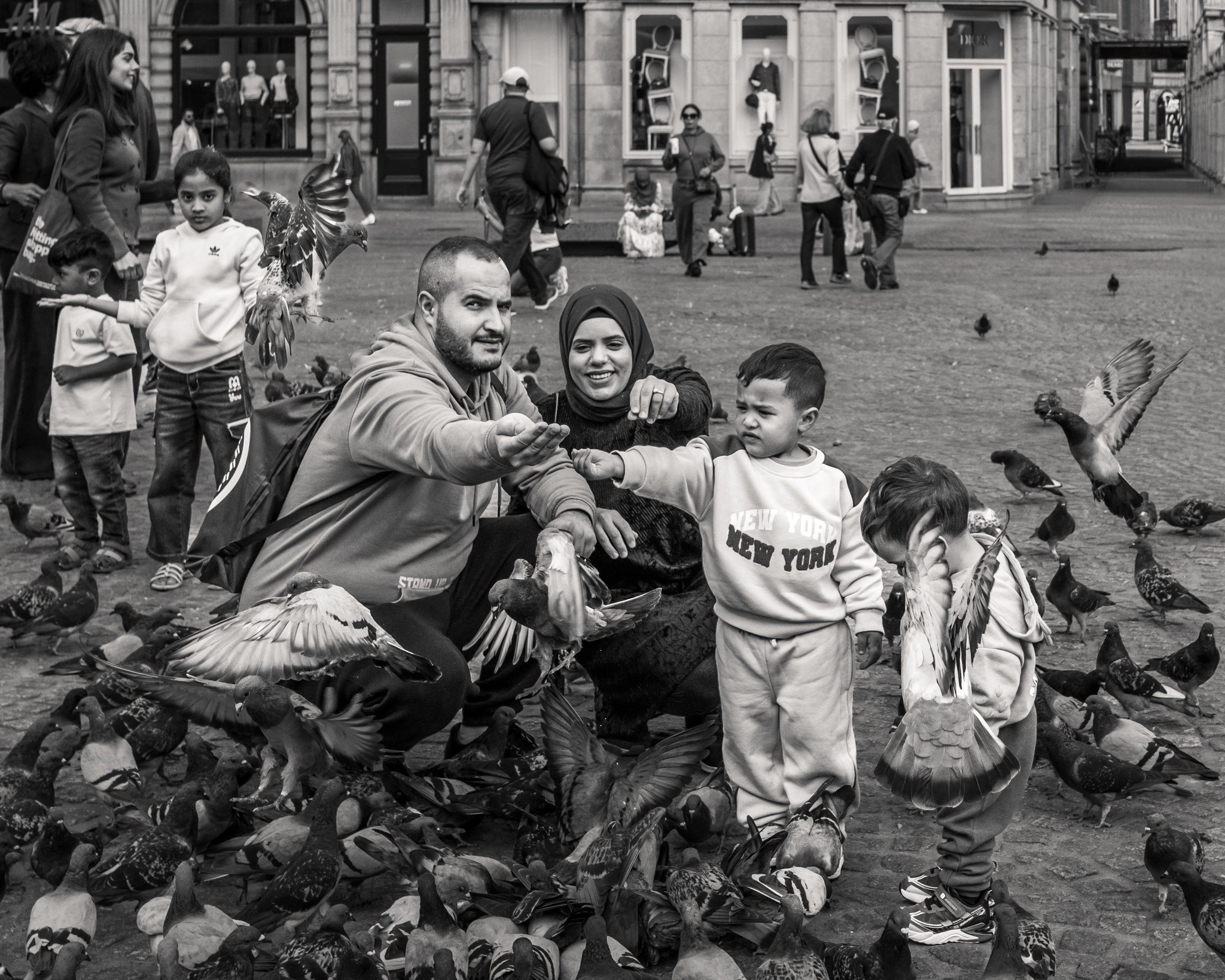
Get within arm’s reach, and the street turns into a layered, living scene.
Working the Lowland Light
The light in the Netherlands is distinctive—low-slung, sharp, and constantly bouncing off open water. Early in the morning along the Keizersgracht, it cuts straight down the canal corridors.
Working with a 28mm means being close enough to share that exact light with your subject. You aren't standing sixty feet away shooting through a zoom; you are working at two meters or less. At that distance, the camera stops being a wall between you and the street.
The mechanics become dead simple. Set your aperture to f/8, preset your focus tab to two meters, and let depth of field do the work. With the camera locked in, you stop fumbling with settings, stop waiting for autofocus to acquire a target, and simply wait for the gesture to happen. It produces images rooted in the classic Dutch ideal: nuchterheid—unpretentious, clear-eyed reality.
Building Real Street Instincts
The 28mm has a reputation for being difficult because it doesn't hide sloppy footwork or technical hesitation. It won't let you be passive. It forces you to commit to your position, square your horizon, and compose the entire frame from edge to edge.
Once that rhythm clicks, the street stops feeling overwhelming. You stop hunting for random snapshots and start recognizing compositions before they even happen. You see the stage, lock in the frame, and let the subject move into it.
That intentional way of working is what separates a lucky click from a deliberate photograph. And on the canals of Amsterdam, no lens does it better.
Private 1:1 Field Sessions in Amsterdam
The fastest way to master manual mechanics and spatial composition is through direct, real-time feedback on the pavement.
At Amsterdam Creatief, I run private, strictly 1:1 field sessions tailored to your gear, your pace, and your creative focus. Guided by a veteran photojournalist and educator, you learn how to eliminate technical friction, zone-focus with total confidence, and read the unique geometry of the city.
The Field Clinic (2.5 Hours): Strip away menu clutter, dial in manual workflows and zone focusing, and develop an instinctive shooting rhythm on the street.
The Field Study (6 Hours): Move past single frames to build a structured, multi-location visual story across historic Amsterdam.
The Residency: An intensive, multi-day deep dive for photographers dedicated to producing a definitive body of work.
You are welcome to bring a partner or travel companion at no additional cost.
Book Your Field Session — Master your camera. Learn to read the street.