The Rhythm of Recognition:
Mastering the OODA-Loop
Most documentary artists spend their time chasing the "Decisive Moment." They treat it like lightning—a rare, external event that they hope to be lucky enough to catch. But in the high-stakes friction of global photojournalism, I learned that waiting for lightning is a losing strategy.
Professional seeing isn't about luck. It’s about a Rhythm of Recognition.
To master this rhythm, I borrow a framework from a man who spent his life thinking about high-speed decision-making: Colonel John Boyd. He called it the OODA Loop (Observe, Orient, Decide, Act). In a fighter jet or on a chaotic street corner in the Jordaan, the loop is the same.
1. Observe: The Raw Feed
This is the intake of "Visual Noise." You aren't looking for a "good photo" yet; you are simply scanning the environment for anomalies, light patterns, and movement. You are a sensor, not an artist.
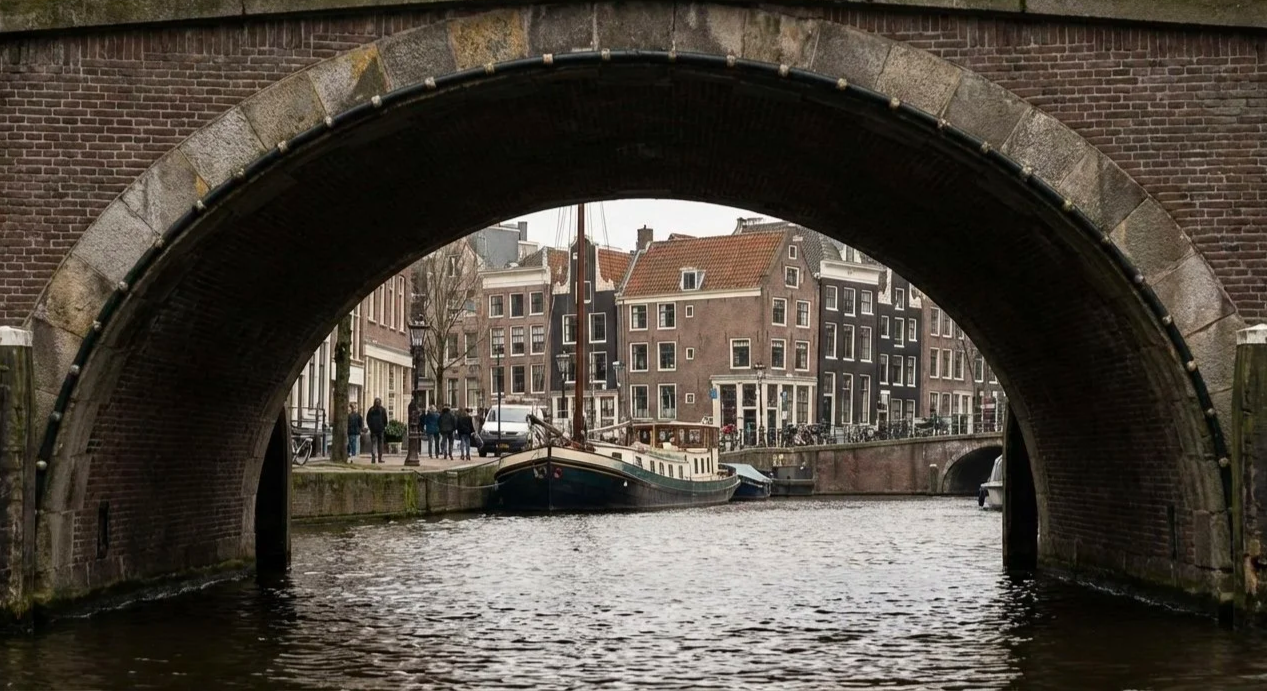
Not looking for a good photo here. Just looking for structural anchors and the frame.
2. Orient: The Architecture of Seeing
This is the most critical phase—and where most practitioners fail. Orientation is the mental filter through which you process what you observe. It is where your "Architecture of Seeing" lives.
Amateur Orientation: "Is that a pretty building?"
Professional Orientation: "Where is the structural anchor? How is the tonal weight distributed? Is the geometry balanced?"
You are applying a diagnostic requirement to the chaos. You are building the "Stage."
3. Decide: The Intentional Frame
Once the stage is oriented, you make a binary choice. You don't "hope" for a subject; you anticipate one. You decide on the "Finality" of the frame before the hero ever enters it. You choose your focal point, your depth of field, and your "Decisive Line."
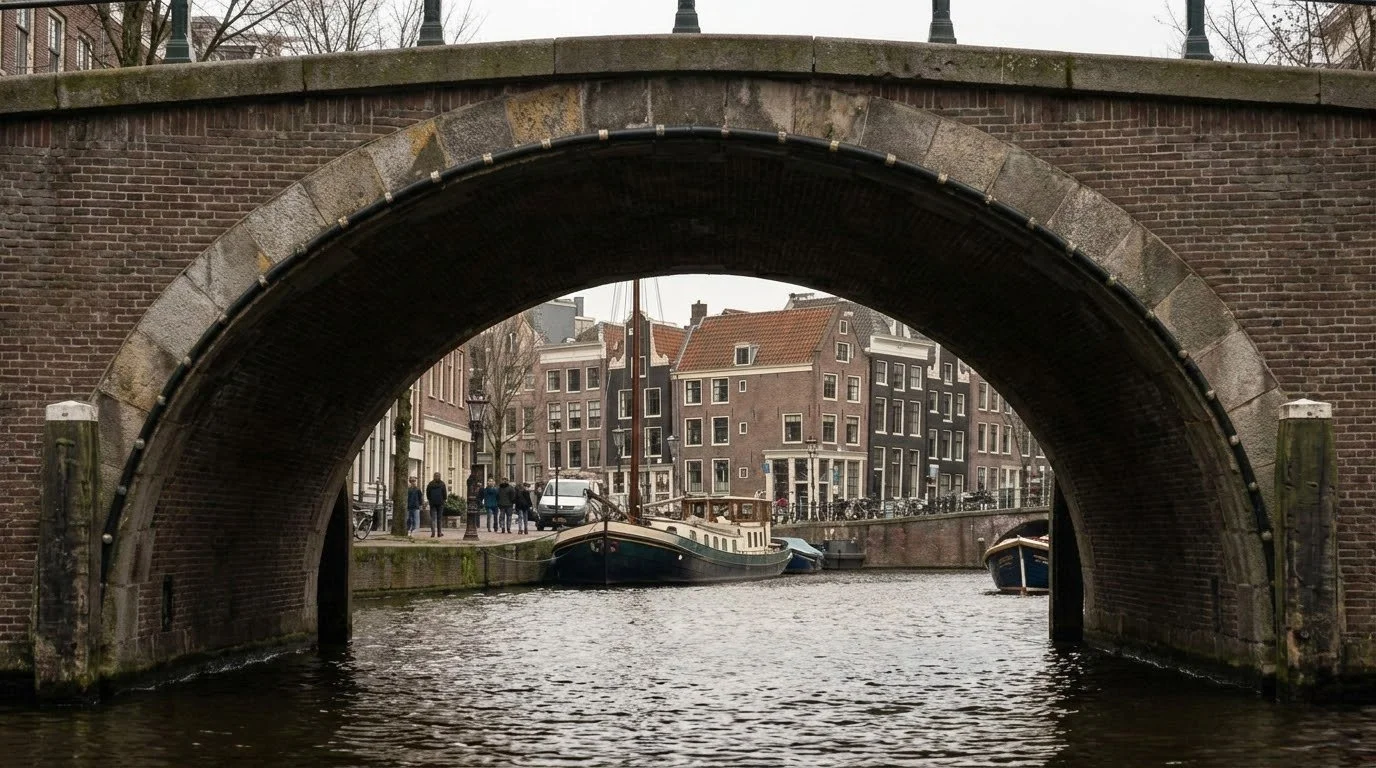
Our ‘actor’ approaches from camera right..
4. Act: The Shutter
The action is the shortest part of the loop. If your Orientation was correct, the Act is an afterthought. The shutter is simply the confirmation of a decision you already made three seconds ago.
"Instinct is just internalized structure."
When you see a veteran photographer move with uncanny speed, you aren't witnessing better reflexes. You are witnessing a faster OODA loop. Their "Orientation" phase is so refined that the geometry of the street reveals itself in milliseconds.
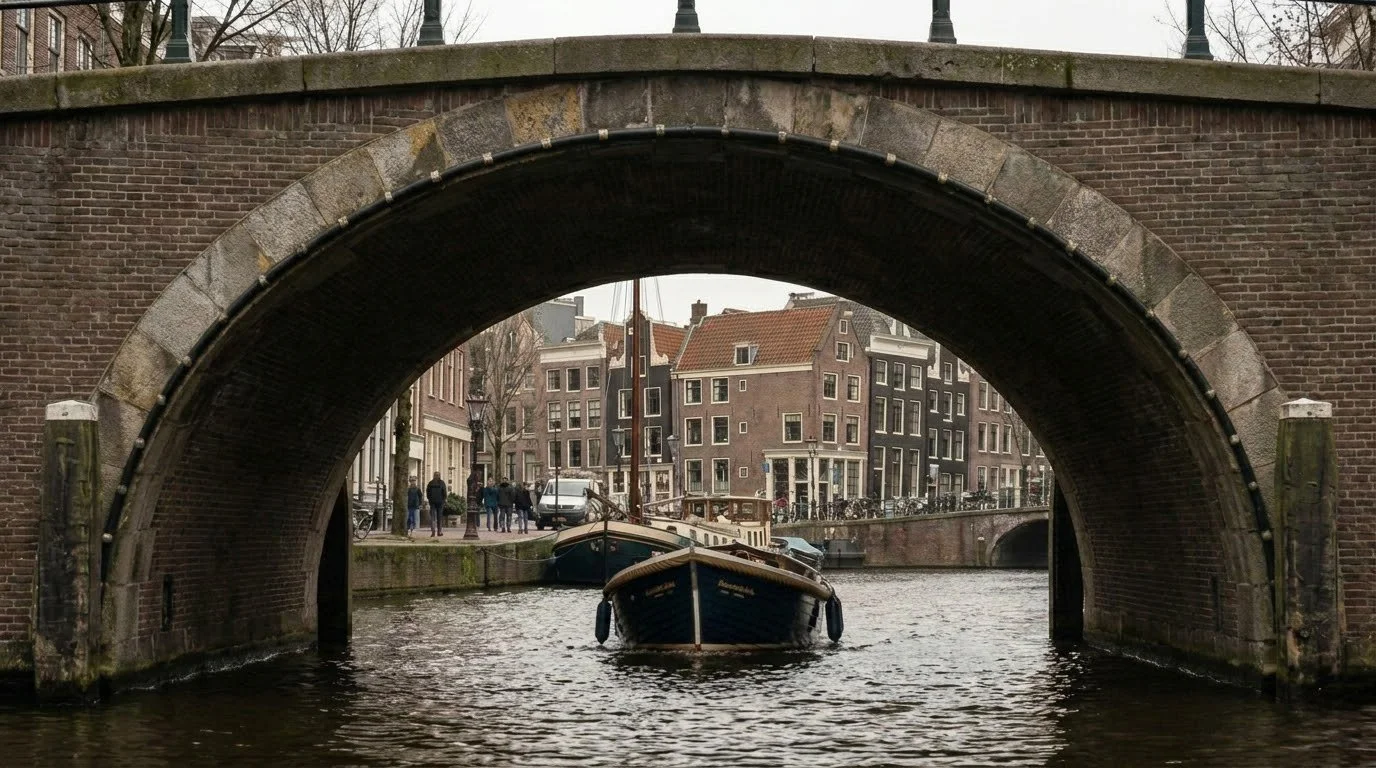
The moment arrives.
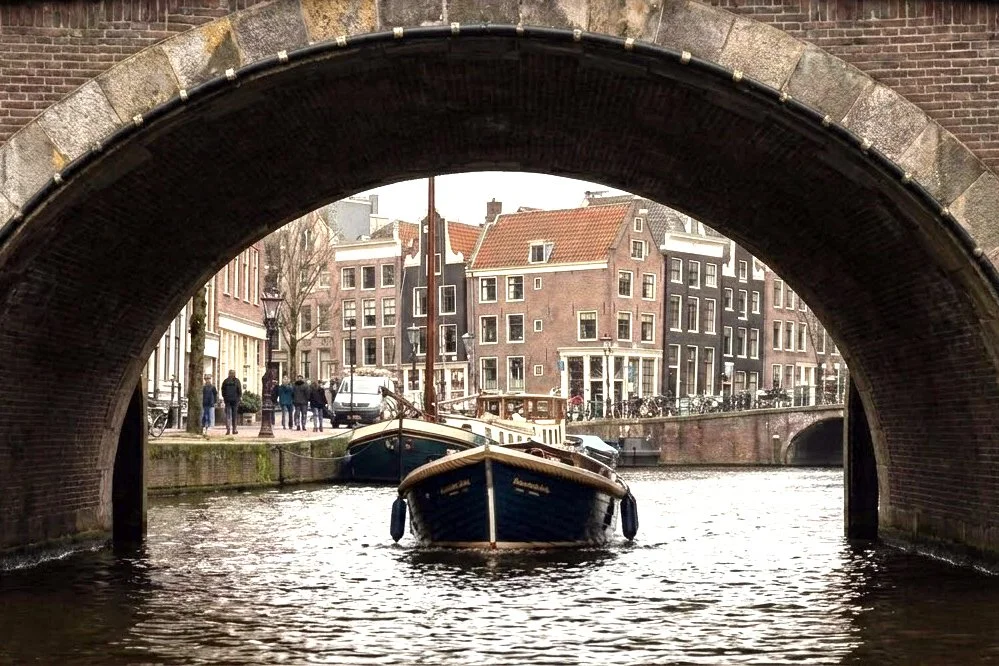
The moment is captured.
The Lesson for the Field
If you find yourself constantly "missing" the shot, stop trying to be faster with your finger. Start being more rigorous with your Orientation.
Spend ten minutes today not taking photos, but simply "Orienting" to the geometry of a single street corner. Build the stage in your mind. By the time the "Actor" arrives, you won't be reacting. You’ll be recording a story you’ve already authored.