Stop Hunting, Start Authoring
Stop gambling with your talent.
Stop Hunting, Start Authoring.
We don’t need more snapshots, and no one wants to see your gallery of missed shots.
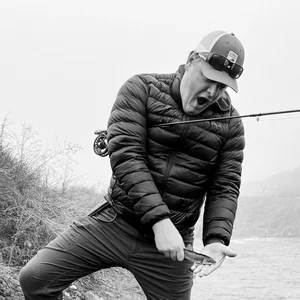
I spent over two decades as a documentary photographer—newsrooms, frantic weddings, the weird energetic stillness of fishing photography. I lived for the "decisive moment." When I started, I was a professional reactor. I chased the light and subjects, convinced that if I just moved faster and hit the shutter in time, I’d catch the soul of the city in 1/500th-of-a-second.
I missed more often than I “hit”.
Eventually, I learned that the chase is a sucker’s game. A photo is Subject + Geometry + Light. If you aren’t planning for the latter two, you’re gambling on the subject alone to carry the photo. It’s a gamble where the house almost always wins. If you're reacting, you're already late. By the time you see something, it’s already happened.
The Myth of the Lucky Shot
People talk about "having a good eye" or "trusting their instinct." They treat great photography as a playground for luck. But after twenty-five years filing for news organizations, I learned a hard truth:
Instinct is just internalized structure.
What we call "luck" is actually the speed at which we apply structural discipline. As Louis Pasteur put it, “In the fields of observation, chance favors only the prepared mind.” If your work feels like a series of "near misses," stop trying to be faster. Start being more intentional.
Step 1: Build the Stage
I no longer chase stories; I let the story step onto the stage I’ve built for it.
Before you look for a subject, decode the geometry of the space. Look for the "bones" of the city—the bridge arch, the rhythm of the gables, the way a shadow cuts the cobblestones. I compose that frame as if it’s a painting that will stay empty forever. If the photo doesn't work as a minimalist study of shapes, a person walking into it won't save it.
I’m not posing the subject; I’m choosing the Arena.
Step 2: Collaborate with the Light
In Northern Europe, the light isn't a prize you win; it’s a collaborator you sit with.
That flat, grey "Leitz-light" everyone complains about? It’s your best friend. It turns the city into a giant softbox. It deepens the reds of 17th-century brick and turns canal water into a black mirror. When you stop obsessing over the "perfect" sun, you start seeing the visual architecture.
Step 3: Anchor the Technical Intent
I take creative control away from the camera’s algorithm. I use Manual + Auto ISO and ride the exposure compensation to lock in the mood.
The Shutter: Set to freeze what I want still, or blur what I want to move.
The Aperture: Set to define the focus and the depth of the stage.
The Wait: Once the intent is anchored, the gear disappears. Now, I wait for the Hero.
Step 4: Wait for the Hero
Once the stage is built, your job is done. You don't "hunt" the person; you wait for the hero of the story to move into and complete the frame you’ve already authored.
When that "spark of life" finally steps into the light, you aren't scrambling. You’re ready. Because you aren't reacting to the moment—you’re hosting it.
The Discipline of the Reset
Even now, I still feel the old itch.
Last Tuesday in the Jordaan, I saw a flicker of color blocks away. My heart rate spiked. The old reactive ghost whispered: “You’re missing it! Go!” I had to force the reset. I stopped walking. I turned my back on the distraction. I’d set up here for a reason, and I just needed to be patient. I looked at the nearest reflection in a window and I built the stage right there.
This isn't a lesson you learn once. It’s a discipline. Amsterdam has been here for seven centuries; if you have the patience to build the frame, the city will pose for you.